Unknown's avatar

About Scott Orman

Emergency Medicine Specialist, Auckland Hospital; Auckland HEMS Doctor

Pre-hospital RSI Resources

Pre-Hospital Intubation: Why all the controversy?

A 2007 review of reasons why pre-hospital intubation is controversial, with positive and negative evidence. By David Lockey, Frenchay Hospital, Bristol, and London HEMS

Read more here…

——————–

Pre-Hospital Rapid Sequence Intubation

A review of method, controversy, and evidence, by Dr Peter Sherren (London HEMS), delivered to Australian College of Ambulance Professionals, October 2012

——————–

Pre-Hospital Rapid Sequence Intubation Improves Functional Outcome For Patients With Severe Traumatic Brain Injury

Bernard et al, Annals of Surgery, 2010

A total of 312 patients with severe TBI were randomly assigned to paramedic rapid sequence intubation or hospital intubation. The success rate for paramedic intubation was 97%. At 6 months, the median GOSe score was 5 (interquartile range, 1–6) in patients intubated by paramedics compared with 3 (interquartile range, 1–6) in the patients intubated at hospital (P = 0.28). The proportion of patients with favorable outcome (GOSe, 5–8) was 80 of 157 patients (51%) in the paramedic intubation group compared with 56 of 142 patients (39%) in the hospital intubation group (risk ratio, 1.28; 95% confidence interval, 1.00–1.64; P = 0.046).

Read more here… (pdf source – Ambulance Victoria)

——————–

Head Injury Retrieval Trial Results
A presentation by Alan Garner, Medical Director of Careflight, at ICEM 2012

Physician led prehospital trauma teams decrease the length of ICU stay for patients with severe head injury. Sensitivity analyses indicate that there may also be significant benefits in mortality and morbidity for transportation injury patients that was obscured by the highly selective cross overs in this trial

Read more here…

——————–

Greater Sydney Area HEMS Pre-Hospital RSI Manual

Read more here…

What? There are FIVE patients?!

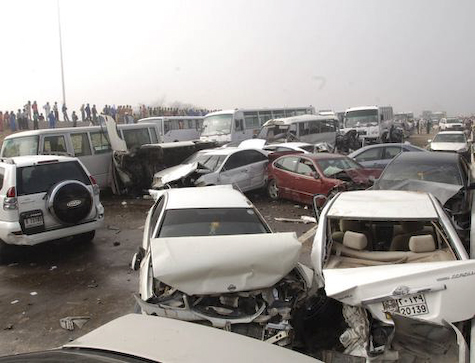
Minor fender-bender in Dubai

One of the earlier jobs I did with the Auckland HEMS proved to be one of the most educational for me. The paramedic and I were tasked to an MVA with two patients. On arrival we discovered there were actually five patients – two with abdominal injuries and abnormal vital signs, one with an open femur fracture, one with a trivial head injury but anti-coagulated, and one with minor injuries. Several St Johns ambulance crews were already on scene, and managing things admirably. The two patients with abdominal injuries were transported by helicopter (this proved to be the correct decision), but as a doctor not familiar with chaotic scenes and multiple patients, I learnt some valuable lessons:

1) Doctors and paramedics assess patients differently

Initially the paramedic and I attempted to ‘divide and conquer’, with us splitting the patients between us for initial assessment. Coming from different backgrounds, the focus of our assessments was different, with the result being that I ended up assessing his patients as well, and he ended up assessing mine. This was clearly inefficient.

With the main function of the HEMS doctor being to provide additional resuscitation and medical skills to patients who need them, a more efficient way of us assessing which patients would benefit from my intervention would have been for us to briefly assess all five together, identify the two sickest for helicopter transport, and leave me to manage/package them while the paramedic assisted the ambulance officers with scene management and care of the other patients, who were destined for road transport. There would be a clear exception to this however when the scene controller directs the doctor to the sickest patient(s) on helicopter arrival.

2) Doctors need to be familiar with ambulance hierarchies and skill mixes

Some of the St Johns staff on scene were volunteer ambulance officers without the authorisation to perform certain interventions (giving morphine or splinting the femur fracture for example). I was unaware of this, and mistakenly assumed that such interventions would be taking place without input from the helicopter paramedic, myself, or the senior paramedic at the scene. The fact that these interventions did not happen at the time I assumed they would contributed to my perception of chaos (I take my hat off to paramedics who do this regularly!). ASKING about the skill set of ambulance officers is crucial to ensure that the patient gets the right care at the right time with maximum efficiency – assume nothing!

3) A scene with multiple patients provides significant equipment challenges

The HEMS doctors bag that we carry contains equipment for advanced medical interventions and surgical procedures. It is NOT well suited to more basic first aid functions, obtaining IV access, providing analgesia, and commencing IV fluid. For the patients at this scene, interventions like this were all that were required pre-hospital. With patients spread apart over the scene, several raids on the Thomas pack were required – this was time-consuming and inefficient. Our equipment needs work to make it more amenable to splitting it between multiple patients, but in the interim I now carry a small pack in my pocket with some basic equipment (cannulae, leur locks, flushes, drawing-up needles, gloves, tape etc). A thigh pouch has also made its way into use.

4) With two stretchered patients in the helicopter, intervention is difficult

The two patients we transported were both on stretchers wearing cervical spine collars. the paramedic and I were tucked at the front under a hefty pile of equipment. Performing any significant intervention on a patient in-flight would have been virtually impossible. If a patient is unwell enough to require significant intervention in-flight, the risks and benefits of taking a second patient on the same flight need to be seriously considered.


Some curious events on Browns Island…

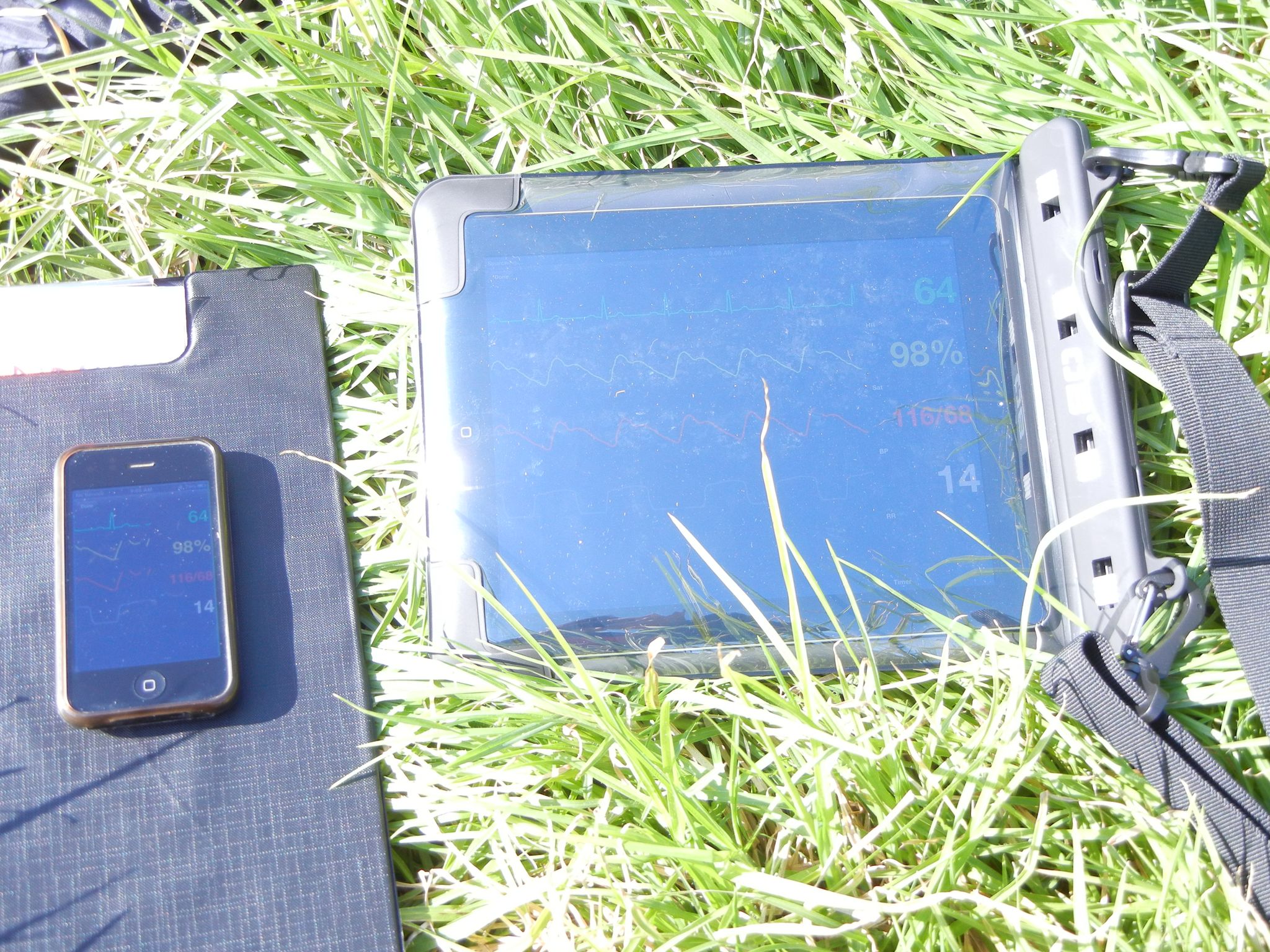
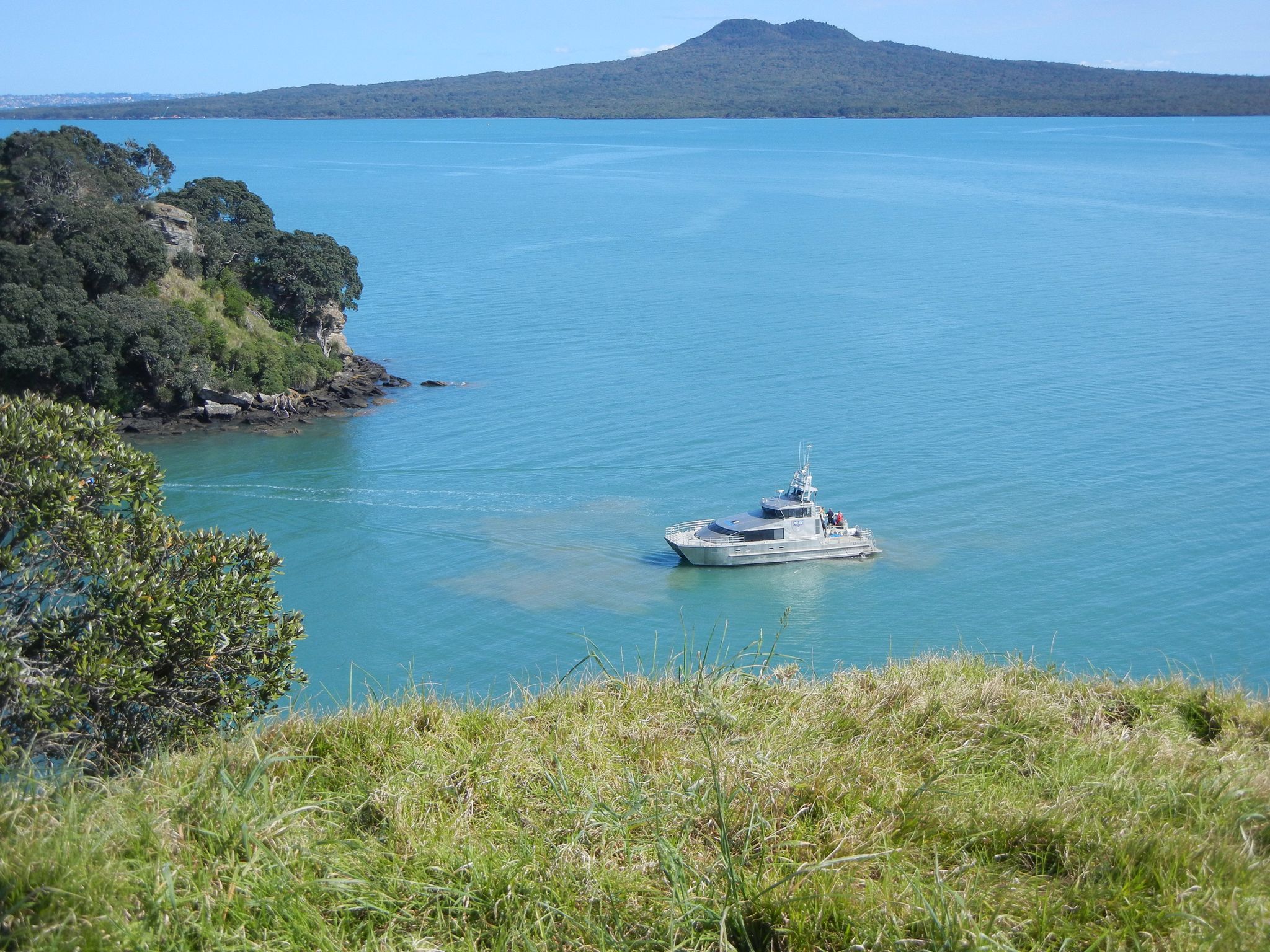
On October 30th, the HEMS group conducted a simulation exercise on Browns Island, in the Hauraki Gulf. The scenario – devised, organised, and conducted by Dr Sam Bendall – involved two patients simulated by low-fidelity mannequins, with monitoring readings simulated using iPads, iPhones, and the SimMon App.

The first patient was a 50 year old male who had fallen down a steep slope, and had come to rest lodged against a small tree. He had chest injuries with a pneumothorax which rapidly tensioned, pelvic fractures, and a femoral fracture. He was tachycardic, hypotensive, and hypoxic.

During his assessment it was revealed that his 6 year old son, who had epilepsy, had taken a cell phone to call for help from high ground. The boy, who was out of sight, had suffered a seizure, hit his head on a fence post, and had a severe head injury with trismus.

Key learning objectives of the scenario, observed separately by multiple observers, were:

1. Teamwork and Communication
2. Team integration
3. Planning and Preparation
4. Situational awareness
5. Communication at the scene
6. Equipment
7. Paediatric equipment and protocols.

Following the scenario and debrief, the main learning points identified were:

1. As a team we need to make sure we don’t lose impetus, and that our communication is clear, cohesive, and efficient, and results in things being done.

2. When the situation changes (in this case when it became clear that the second patient was critically ill) , a ‘time-out’ or similar must occur involving all team members to ensure that everyone is ‘on the same page’. In this scenario there was a lapse in communication that led to the team members with the patient needing RSI not having vital equipment. There was discussion around the practicalities of a ‘time out’, with acknowledgement that it may not be physically possible for the team to get together, and the crewman may have a vital role as an information conduit. Given the different backgrounds of the team members, there is also a need for everyone to speak/understand the same language.

3. When the team is split between multiple casualties, the doctor needs a radio.

4. The equipment in its current format cannot be split easily between multiple casualties. Further creative thinking, research, and development is required.

Our sincere thanks to ARHT, Leon Ford (who seems to be able to procure anything at any time – “A crashed 747 for training, by tomorrow? No problem”.), Rob Anderson (who seemed strangely happy to be taking three doctors on a one-way trip to a rat-infested island), the crew of the Police launch Deodar II, Mike Shepherd and Trish Wood at Starship for the loan of paediatric simulation equipment (we even got the shirt off Mike’s back), and our many observers who gave up their time.

Photos by Andrew Petrosoniak, Pieter Lubbert, and Scott Orman