Prehospital Trauma Life Support Course Manual

The Prehospital Trauma Life Support Course (PHTLS) is an education program developed between NAEMT (National Association Of Emergency Medicine Technicians) and the American College of Surgeons.

The course manual is available (somewhat inexplicably, because this manual is for sale online!) from the website of the French PHTLS group:

Chapters are here (and are NOT hosted at aucklandhems.com)

1) PHTLS – Past, present, and future

2) Injury prevention

3) The science and art of prehospital care: Principles, preferences, and critical thinking

4) Kinematics of trauma

5) Scene assessment

6) Patient assessment and management

7) Airway and ventilation

8) Shock

9) Head trauma

10) Spine trauma

11) Thoracic trauma

12) Abdominal trauma

13) Musculoskeletal trauma

14) Burn injuries

15) Paediatric trauma

16) Geriatric trauma

17) Golden principles of prehospital trauma care

18) Disaster management

19) Explosions and weapons of mass destruction

20) Environmental trauma I: Heat and cold

21) Environmental trauma II: Drowning, lightning, diving, and altitude

22) Wilderness trauma care

23) Civilian tactical emergency medical support (TEMS)

24) Glossary

Principles of extrication


While the involvement of doctors and paramedics in extrication of trapped patients from cars is limited to medical rather than demolition aspects, it is important for us to understand the general process of extrication.

In particular, the two broad types of extrication are immediate extrication, which is used when patient demise is imminent, and controlled extraction, which is slower but carries less risk. Which of these two techniques the Fire Service use will depend partly on the medical advice they are given after entrapped patients have been assessed.

This paper provides a nice overview of extrication methods.

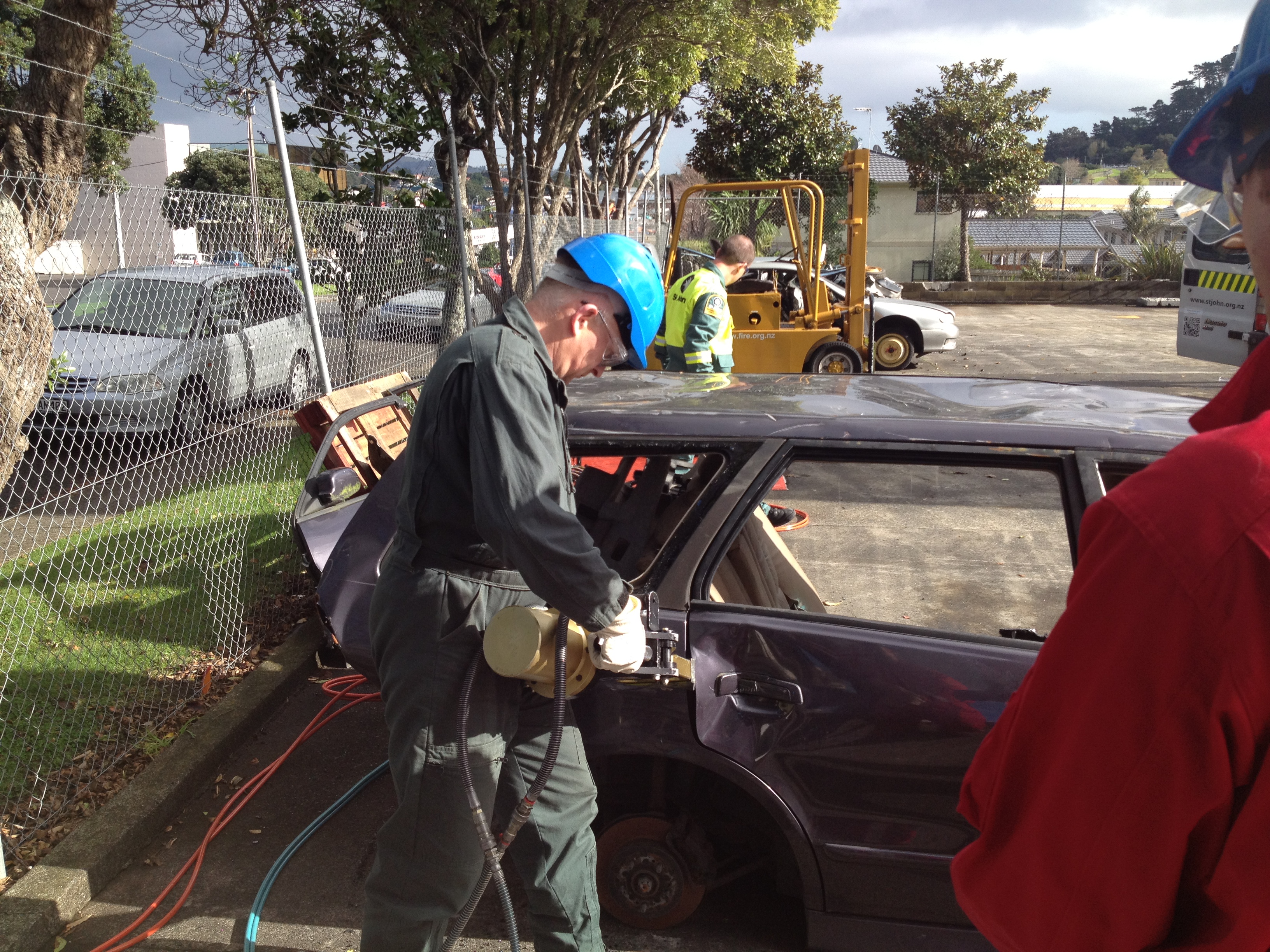
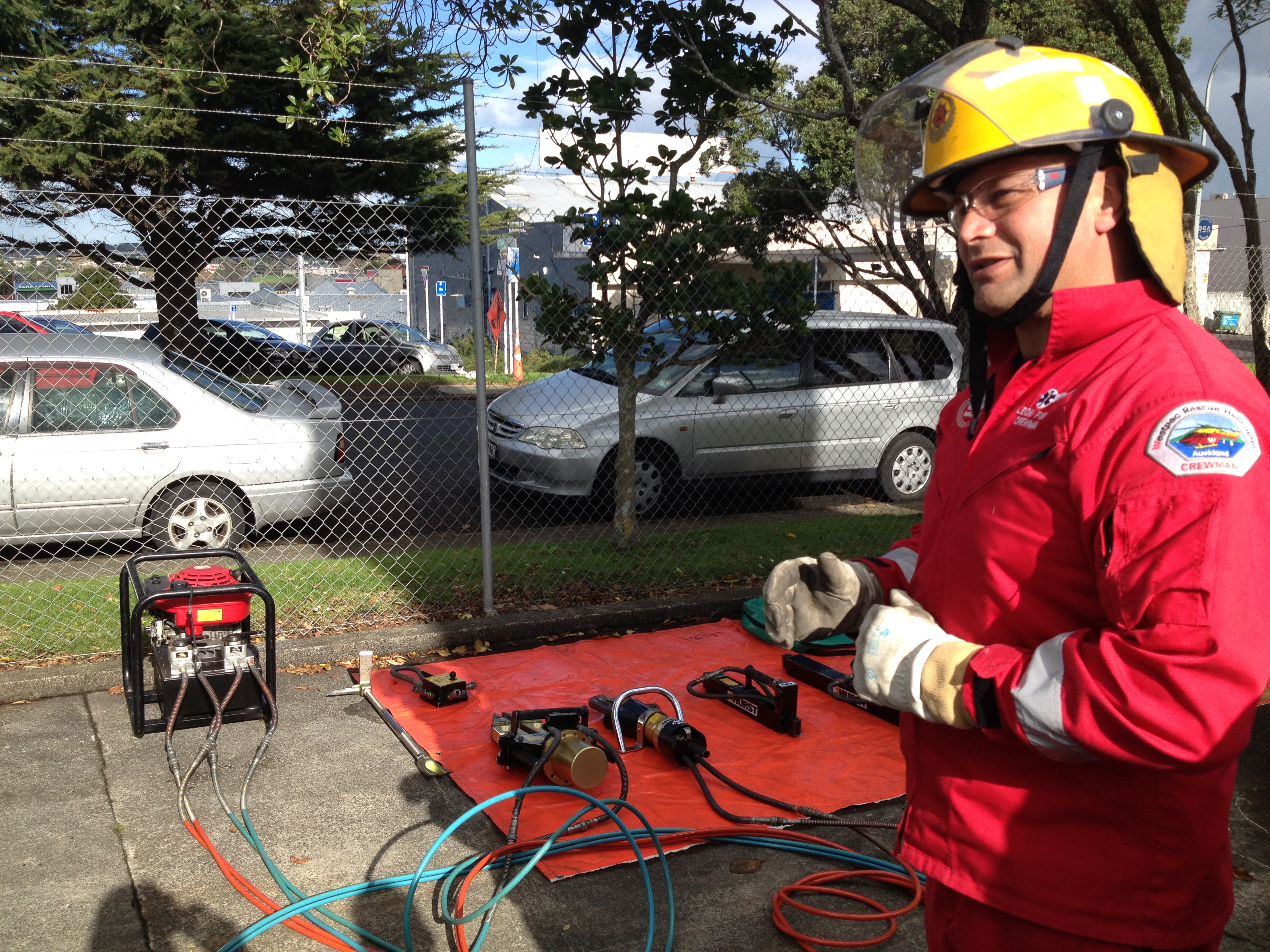
The photos below are from the ‘extrication’ section of the Careflight Prehospital Trauma Course, conducted in Auckland in 2012.

Leon Ford – the man to see for all your car demolition needs!

You won’t find these tools at Bunnings! Rusty Clark

Auckland ED Clinical Director, Tim Parke, trials a new device for chest drain insertion

Petro’s Prehospital Practice (session #2) A success!

Thursday’s have turned into our structured simulation day at the helicopter base. Part of my learning objective at ARHT (in Auckland) is to improve my abilities in running and debriefing simulation scenarios. While the group has (and continues) to run impromptu simulation sessions we have moved to a structured aspect that will allow us to be creative and try new things. We have the luxury of our Rescue Helicopter Trust being the subject of a TV show so there’s an abundance of footage of previous jobs. Today we selected a scenario from a previous episode that was viewed by the sim team before starting (check it out all the episodes here). This set the scene and we immediately jumped right into the scenario. The team stormed out to the scene and within minutes were immersed within the scenario. Check out a few pics from the scenario below.

Scott and Ati working hard during a V. Fib arrest. Great to see Scott providing some solid CPR!

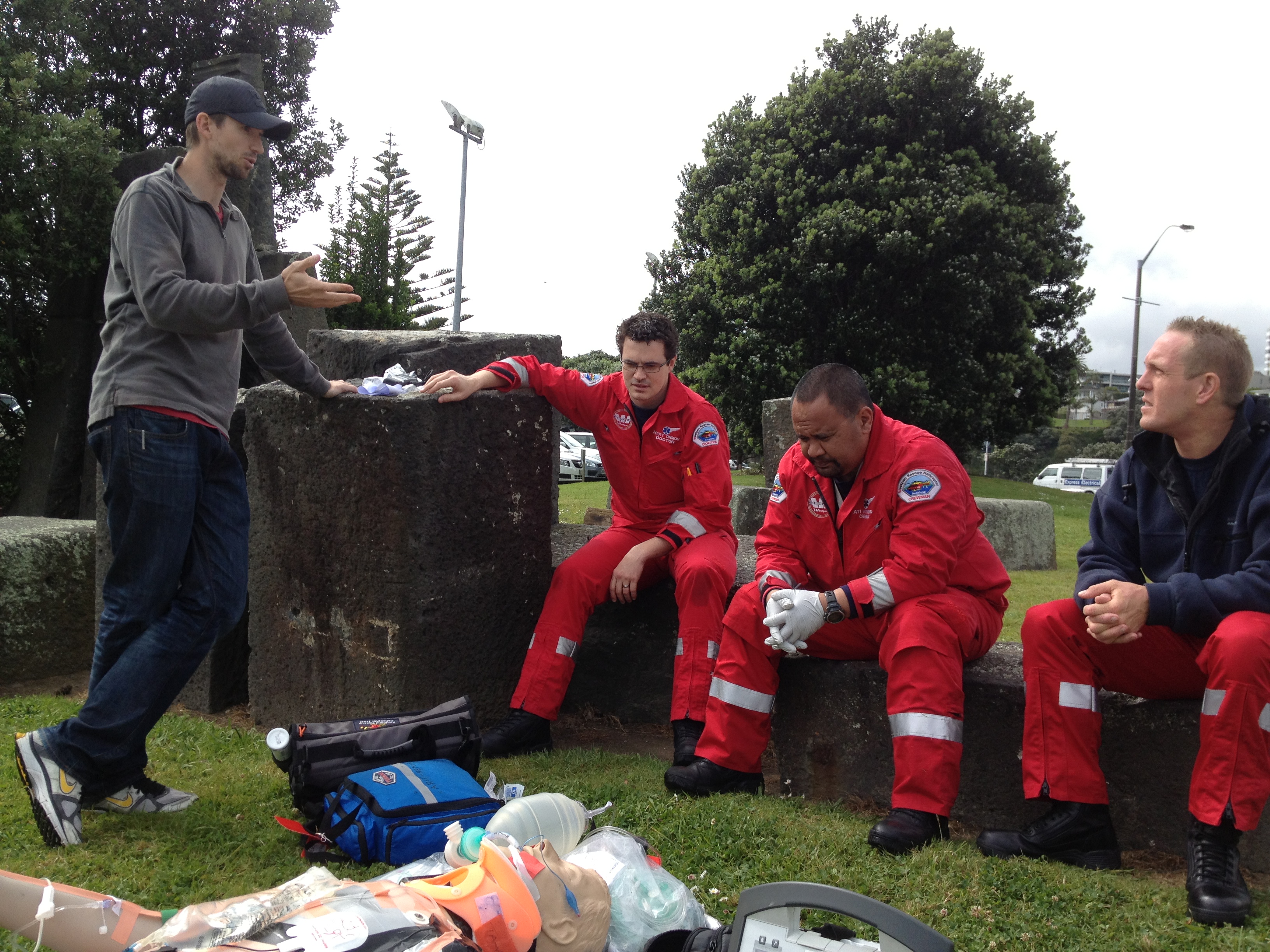
The debrief – doing my best to keep people interested! Do you think they were listening?

The duty crew for the day formed today’s team and it was comprised of three members who did an awesome job! We had great teamwork from all three; Ati (crewman), Ross (Advanced paramedic), Scott (HEMS physician). Two key themes emerged from the day:

1) Role assignment and leadership: sometimes pre-assignment of a leader in the pre-hospital setting can be disrupted depending on available personnel (or lack thereof). The team decided as long as it’s well verbalized that there’s going to be a transition in leadership that it shouldn’t be an issue

2) Ergonomics: Placement of equipment and personnel is super important for being efficient and maximizing speed. Following the scenario we examined the set up the team had established then looked at ways to improve it. Chris Denny (HEMS physician supervising the scenario) spoke of using the stretcher as “table” and the use of angles as a strategy to improve scene ergonomics.

This session was a great opportunity for me to practice my debriefing skills using some stuff from the Harvard Simulation group. The idea of advocacy-inquiry method moves away from the idea that we shouldn’t judge during debriefings. Instead, the debriefer can provide an opinion but at the same time they try to understand how/why the learner decided to make such a decision even it may have been incorrect or controversial. “The instructor can help the learner reframe internal assumptions and feelings and take action to achieve better results in the future” (Rudolph JW et al. Simul Healthcare 2006).
Scenario based simulation

Despite a rather battered mannequin that requires at least a roll of duct tape a week to keep limbs and head attached, the Auckland HEMS group has adopted scenario-based simulation with enthusiasm. Involvement from doctors, paramedics, and crewmen working as a team allows opportunities to improve clinical skills, communication, and CRM elements.

Regularity and quality of simulation has improved with the importation from Canada of Dr Andrew Petrosoniak, who is completing a Master’s degree in education. ‘Petrosoniak’s Prehospital Practice’ is now offered to/inflicted upon whichever duty crew is rostered on Thursdays.

This sort of simulation has been described in print by the London HEMS group, who use it as an integral part of their training – read more here.

Petro’s detailed report on the session shown below is here.

“No matter how many times we shocked him, his head just kept falling off…”