New clinical simulation lab at ARHT and our newest team member!

Over the past few months at ARHT, we’ve been working to secure a location that can be used as our clinical sim lab. While most of our sim is done outside, this will allow for a “think tank” and location to keep all of our supplies. A spot like this will have a huge positive impact on improving our ability to run effective in-situ simulation.

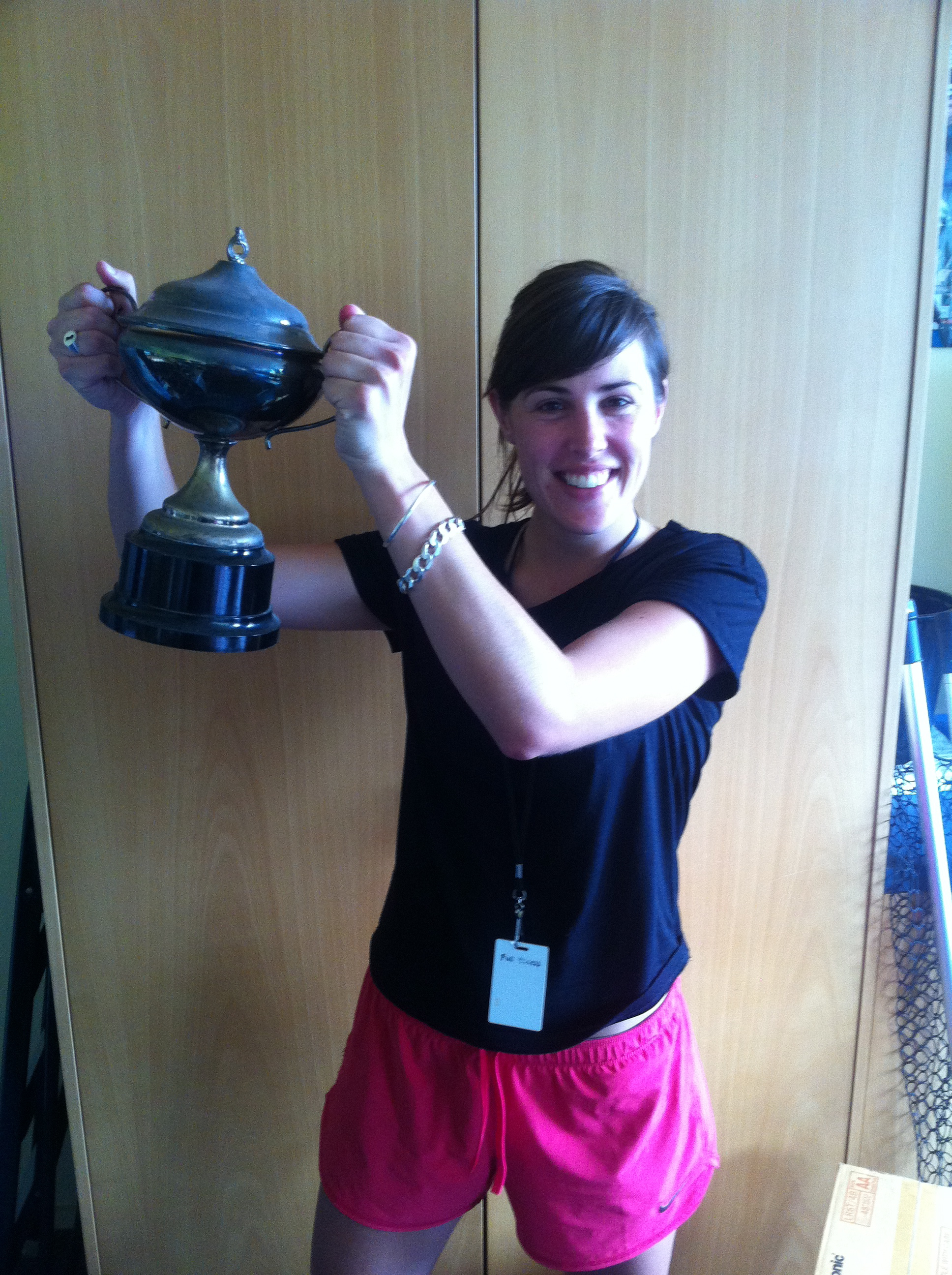
Rossi, our Emergency Medicine award winning medical student (and newest team member) While it may not be the exact replica of the EM award...it's pretty close!

Rossi, our Emergency Medicine award winning medical student (and newest team member) While it may not be the exact replica of the EM award…it’s pretty close!

In addition, we plan to use this site for task training and trialling new equipment. While it has taken some time to get it organized, we’ve made huge progress recently. One of the main reasons we’ve had such success can be attributed to our newest education team member, Rossi, who is a senior medical student at the University of Auckland. She has a keen interest in emergency medicine, retrieval medicine and trauma. Her enthusiasm has been crucial to getting us up and running with a fully functional sim lab. We should also acknowledge her recent achievement as the recipient of a special mention in Emergency Medicine for dedication & teamwork at U of Auckland Medical school. Welcome Rossi, and we look forward to all that you bring!

I also felt it would be great to show the progress we’ve made with the sim lab. This will be an outstanding location to think, work and practice. We’ll be able to re-pack packs for simulations and engage in task training modules.

Here’s a few pics of the progress…and completion!

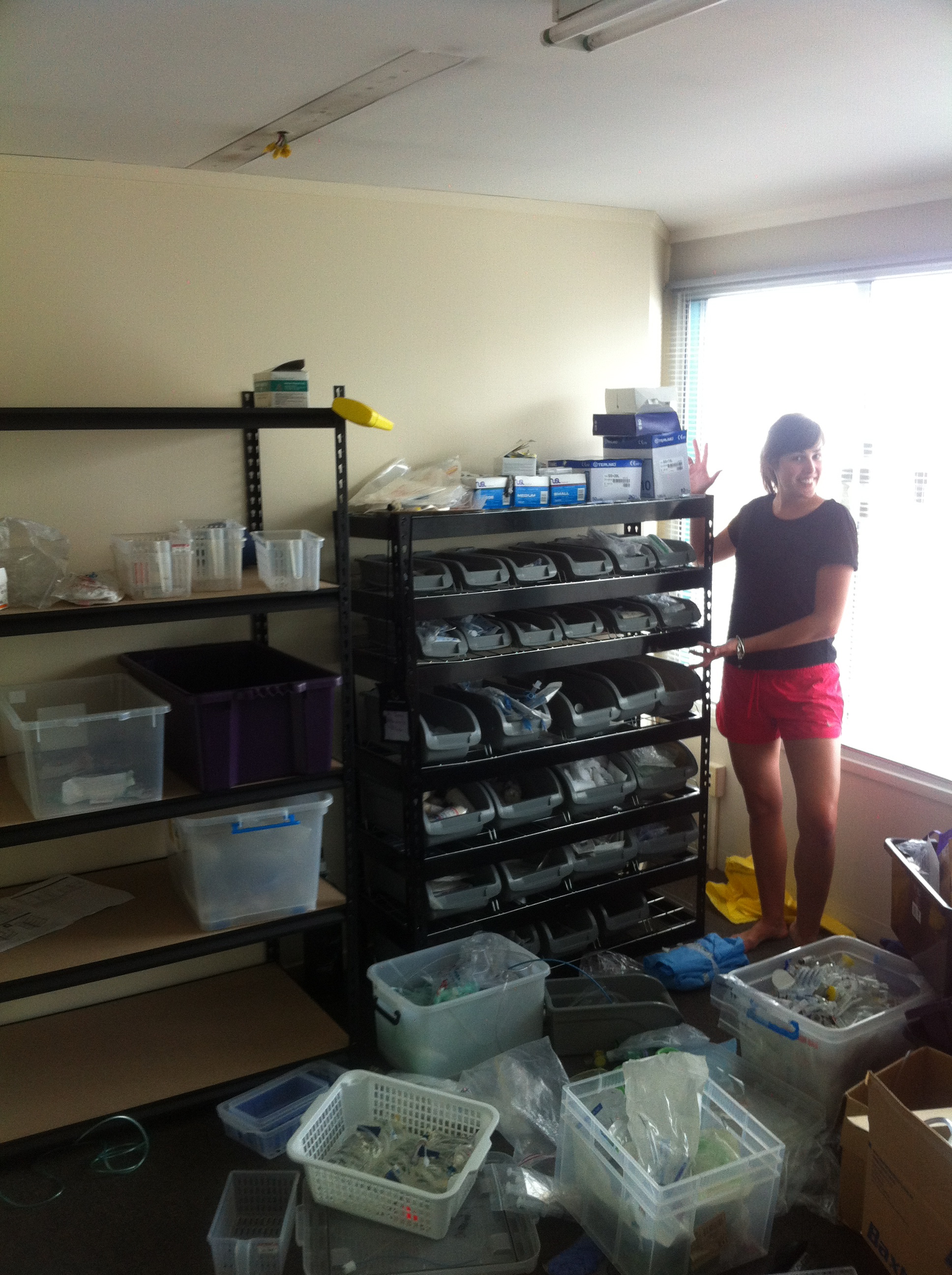
Sim lab: the beginning

Sim lab: the beginning

Rossi doing her best Vanna White impersonation

Rossi doing her best Vanna White impersonation

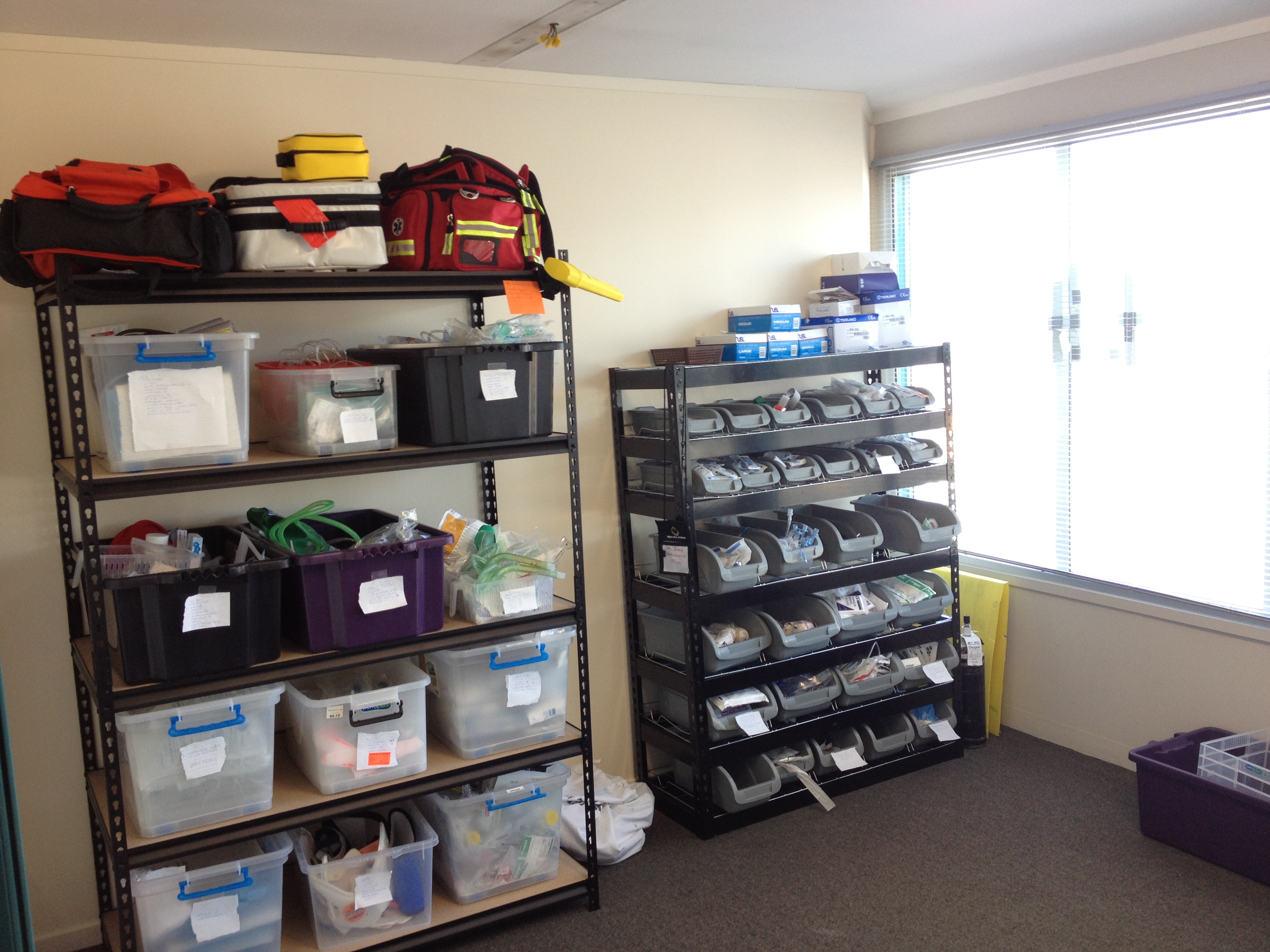
Sim Lab: the current state! Ready for use!

Sim Lab: the current state! Ready for use!

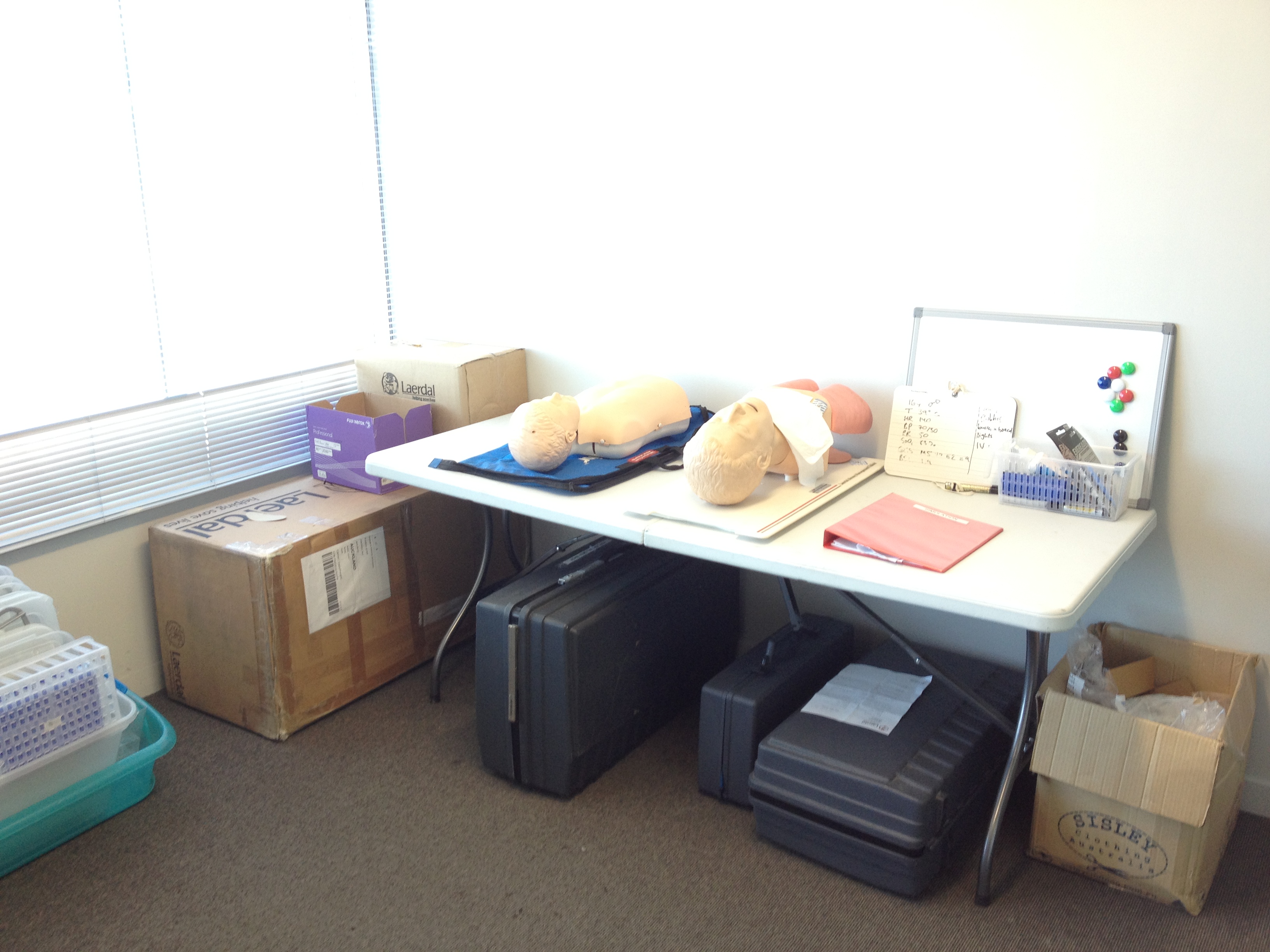
Sim Lab: airway task trainers...clearly needing a cric to be performed!

Sim Lab: airway task trainers…clearly needing a cric to be performed!

Paramedics in high-stress simulation: performance may be affected

In a recent study from Toronto, researchers studied paramedics in two similar scenarios. Both scenarios involved a 50 year old patient suffering from chest pain. The patient develops pulmonary edema, hypotension and an ECG reveals a STEMI. All study participants (paramedics) performed interventions based on their established local protocols.

In the “high stress” scenario, there was an actor playing the patient’s partner who was visibly distressed and challenging the paramedic’s actions. Also, all alarms were turned up to full volume and there was constant 2-way radio communication going on in the background. None of this occurred in the “low stress”  scenario.

Paramedics were assessed using a global rating scale, a checklist scale and their salivary cortisol levels were measured before and after each scenario (as a response to stress).

The authors noted that “When faced with clinically relevant stressors, paramedics demonstrated significant increases in subjective (anxiety) and physiological
(salivary cortisol) measures of stress. These stress responses were accompanied by impairments in some aspects of clinical performance and in the ability to accurately recall information from the case. Although the paramedics demonstrated no impairments in
their ability to complete each individual action required for the particular scenario, decreased scores on the global rating scale indicate that overall they did so more poorly, with less organization and poorer communication or interpersonal skills.” 

Overall, paramedics did feel more stressed in the “high stress” scenario – this was measured both by a survey and cortisol levels. And while they were able to complete all relevant tasks, their global performance assessment was reduced as was their ability to recall specific case details.

Fascinating study! We must recognize the high potential for error among clinicians when faced with stress.This data should guide us towards the increasing use of emergency checklists so that things are not forgotten in stressful environments,  Such findings will lead nicely into a new video by Scott Orman about the use of whiteboards in handovers and the potential for inaccurate data transmission (unless there’s protocols in place to document better!).

These authors also did a similar study with residents – with similar findings! We need to do better as clinicians & educators in recognizing stress as a huge factor leading to errors and implement interventions to manage these potential threats and errors.

Here’s the abstract

The impact of stress on paramedic performance during simulated critical events.Prehosp Disaster Med. 2012 Aug;27(4):369-74. Epub 2012 Jul 25. Leblanc VR, Regehr C, Tavares W, Scott AK, Macdonald R, King K.

Abstract

OBJECTIVES:

Substantial research demonstrates that the stressors accompanying the profession of paramedicine can lead to mental health concerns. In contrast, little is known about the effects of stress on paramedics’ ability to care for patients during stressful events. In this study, we examined paramedics’ acute stress responses and performance during simulated high-stress scenarios.

METHODS:

Twenty-two advanced care paramedics participated in simulated low-stress and high-stress clinical scenarios. The paramedics provided salivary cortisol samples and completed an anxiety questionnaire at baseline and following each scenario. Clinical performance was videotaped and scored on a checklist of specific actions and a global rating of performance. The paramedics also completed patient care documentation following each scenario.

RESULTS:

The paramedics demonstrated greater increases in anxiety (P < .05) and salivary cortisol levels (P < .05) in response to the high-stressscenario compared to the low-stress scenario. Global rating scores were significantly lower in the high-stress scenario than in the low-stress scenario (P < .05). Checklist scores were not significantly different between the two scenarios (P = .12). There were more errors of commission (reporting information not present in the scenario) in the patient care documentation following the high-stress scenario than following the low-stress scenario (P < .05). In contrast, there were no differences in omission errors (failing to recall information present in the scenario) between the two scenarios (P = .34).

CONCLUSION:

Clinical performance and documentation appear vulnerable to the impact of acute stress. This highlights the importance of developing systems and training interventions aimed at supporting and preparing emergency workers who face acute stressors as part of their every day work responsibilities.

Full text pdf is available here (secure area limited to ADHB staff only – ADHB has subscription access for staff to these journals through the Philson Library at the University of Auckland School Of Medicine)
Petro’s Prehospital Practice (session #2) A success!

Thursday’s have turned into our structured simulation day at the helicopter base. Part of my learning objective at ARHT (in Auckland) is to improve my abilities in running and debriefing simulation scenarios. While the group has (and continues) to run impromptu simulation sessions we have moved to a structured aspect that will allow us to be creative and try new things. We have the luxury of our Rescue Helicopter Trust being the subject of a TV show so there’s an abundance of footage of previous jobs. Today we selected a scenario from a previous episode that was viewed by the sim team before starting (check it out all the episodes here). This set the scene and we immediately jumped right into the scenario. The team stormed out to the scene and within minutes were immersed within the scenario. Check out a few pics from the scenario below.

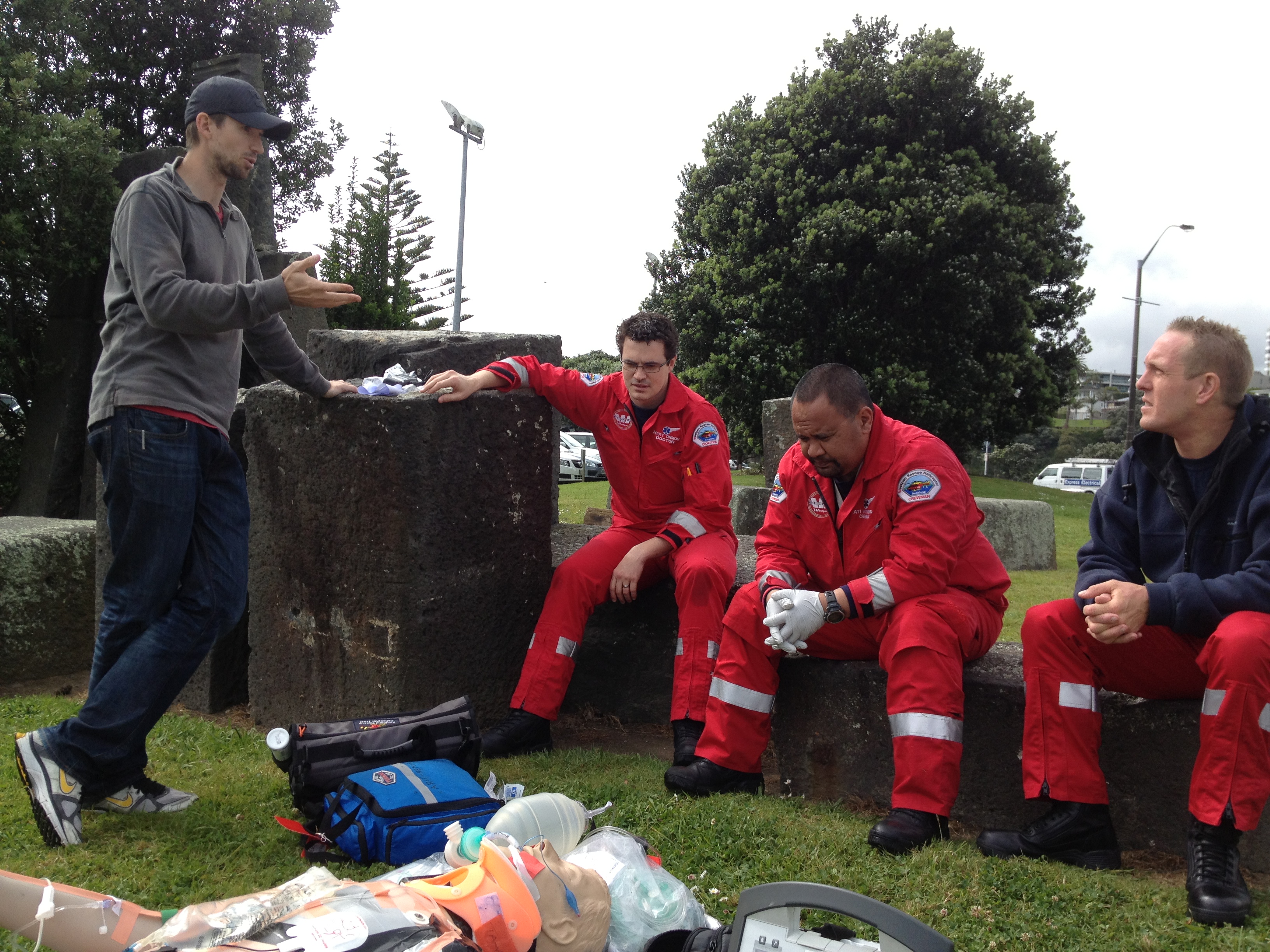
Scott and Ati working hard during a V. Fib arrest. Great to see Scott providing some solid CPR!

The debrief – doing my best to keep people interested! Do you think they were listening?

The duty crew for the day formed today’s team and it was comprised of three members who did an awesome job! We had great teamwork from all three; Ati (crewman), Ross (Advanced paramedic), Scott (HEMS physician). Two key themes emerged from the day:

1) Role assignment and leadership: sometimes pre-assignment of a leader in the pre-hospital setting can be disrupted depending on available personnel (or lack thereof). The team decided as long as it’s well verbalized that there’s going to be a transition in leadership that it shouldn’t be an issue

2) Ergonomics: Placement of equipment and personnel is super important for being efficient and maximizing speed. Following the scenario we examined the set up the team had established then looked at ways to improve it. Chris Denny (HEMS physician supervising the scenario) spoke of using the stretcher as “table” and the use of angles as a strategy to improve scene ergonomics.

This session was a great opportunity for me to practice my debriefing skills using some stuff from the Harvard Simulation group. The idea of advocacy-inquiry method moves away from the idea that we shouldn’t judge during debriefings. Instead, the debriefer can provide an opinion but at the same time they try to understand how/why the learner decided to make such a decision even it may have been incorrect or controversial. “The instructor can help the learner reframe internal assumptions and feelings and take action to achieve better results in the future” (Rudolph JW et al. Simul Healthcare 2006).

Scenario based simulation

Despite a rather battered mannequin that requires at least a roll of duct tape a week to keep limbs and head attached, the Auckland HEMS group has adopted scenario-based simulation with enthusiasm. Involvement from doctors, paramedics, and crewmen working as a team allows opportunities to improve clinical skills, communication, and CRM elements.

Regularity and quality of simulation has improved with the importation from Canada of Dr Andrew Petrosoniak, who is completing a Master’s degree in education. ‘Petrosoniak’s Prehospital Practice’ is now offered to/inflicted upon whichever duty crew is rostered on Thursdays.

This sort of simulation has been described in print by the London HEMS group, who use it as an integral part of their training – read more here.

Petro’s detailed report on the session shown below is here.

“No matter how many times we shocked him, his head just kept falling off…”