Auckland HEMS Checklist Reference Manual

Dear colleagues,

In June of this year our Canadian HEMS Fellow Dr. Robert Gooch shared one of our emergency checklists with the Prehospital and Retrieval Medicine (PHARM) community. Thank you to those of you who provided feedback on this initiative. We continue to draw inspiration from the work of Dr. Atul Gawande. http://atulgawande.com/

Now, in the spirit of Free Open Access Medicine, we are keen to share our complete Auckland HEMS Checklist Reference Manual with the PHARM community. At the start of September we made this manual operational within our service.

Innovation is one element of success; implementation is another core element.  http://www.sjtrem.com/content/19/1/53/abstract This article emphasizes the importance of end-users ‘the sharp end’ being involved throughout the checklist development process. We are fortunate to have input into this checklist from our pilots, crewmen, paramedics and doctors. Even our CEO (who is also a pilot) has shared his experience.

We see these checklists as a living document, which will only improve with use, reflection and feedback.Please download, test, then let us know what you think. Below, please find our Checklist SOP:

———————————————————-

Auckland HEMS Medical Checklists

Standard Operating Procedure (SOP)

  1. Any crew member may activate an Emergency Medical Checklist (EMC) at any time.

  1. In an emergency, a team member will assume the role of lead clinician.

  1. The lead clinician will take any required immediate actions AND direct a team member to read the appropriate emergency medical checklist (EMC). Immediate actions include three steps:

    1. Identify

    2. Understand

    3. Respond

  1. The lead clinician may delegate tasks to other team members (if available). The priority remains direct patient care. Aviation uses the mnemonic ‘ANCA’:

    1. Aviate – Care for the patient

    2. Navigate – Maintain situation awareness and anticipate next steps

    3. Communicate

    4. Administrate

  1. Our checklist format is ‘Challenge-and-Response.’ Each step has a specific actionable response. If an inappropriate response is given, the checklist reader will prompt the lead clinician for the appropriate response. “Brevity is the soul of wit.” – W. Shakespeare, Hamlet.

  1. The checklist reader will not move on from a step until an appropriate response is given.

    1. Stop the checklist

    2. Complete the respective task

    3. Continue the checklist

  1. A checklist may be aborted if:

    1. The physiologic abnormality resolves and the patient’s condition improves

    2. The team is confident the physiologic abnormality is not an emergency

    3. The checklist is unsafe in the given clinical scenario

  1. Some patients may have multiple physiologic abnormalities. It is up to the clinician’s discretion which checklist is used first. Multiple checklists may be used sequentially. In all situations, the clinicians must assess patient and use good judgment to determine the safest course of action.

  1. Emergency checklists are intended as a cognitive aid to improve initial management of time-critical scenarios. A checklist is neither a teaching tool nor an algorithm. In some cases, further management steps may be required once the checklist has been completed.

  1. Usually, time is available to assess the situation before corrective action is started. All actions must be coordinated and performed in a deliberate, systematic manner.

  1. Reference: http://www.projectcheck.org/
 

Care for your controlled drugs – An evolution

Carrying controlled drugs in a pre-hospital setting is a recipe for accidental vial breakages.

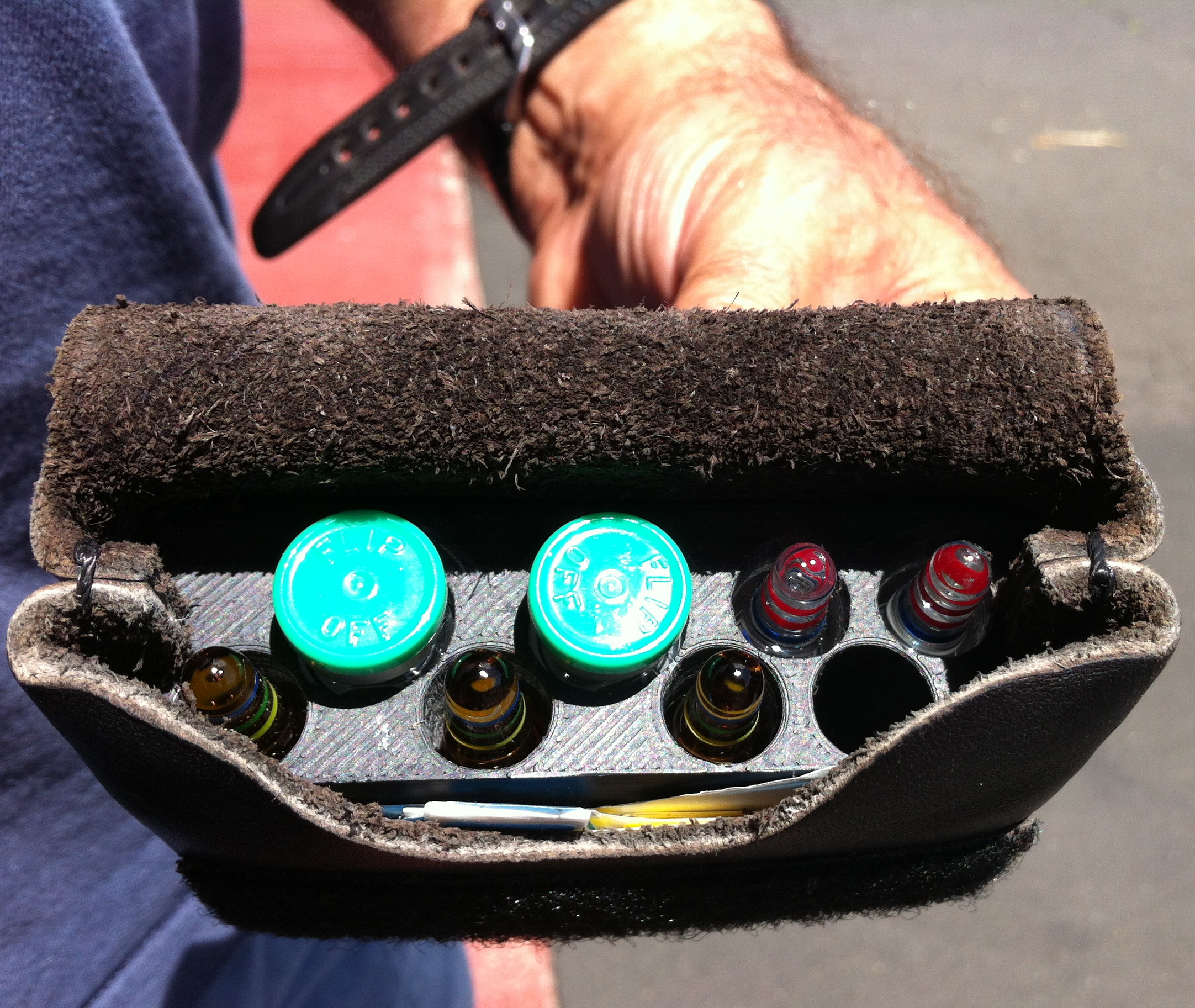
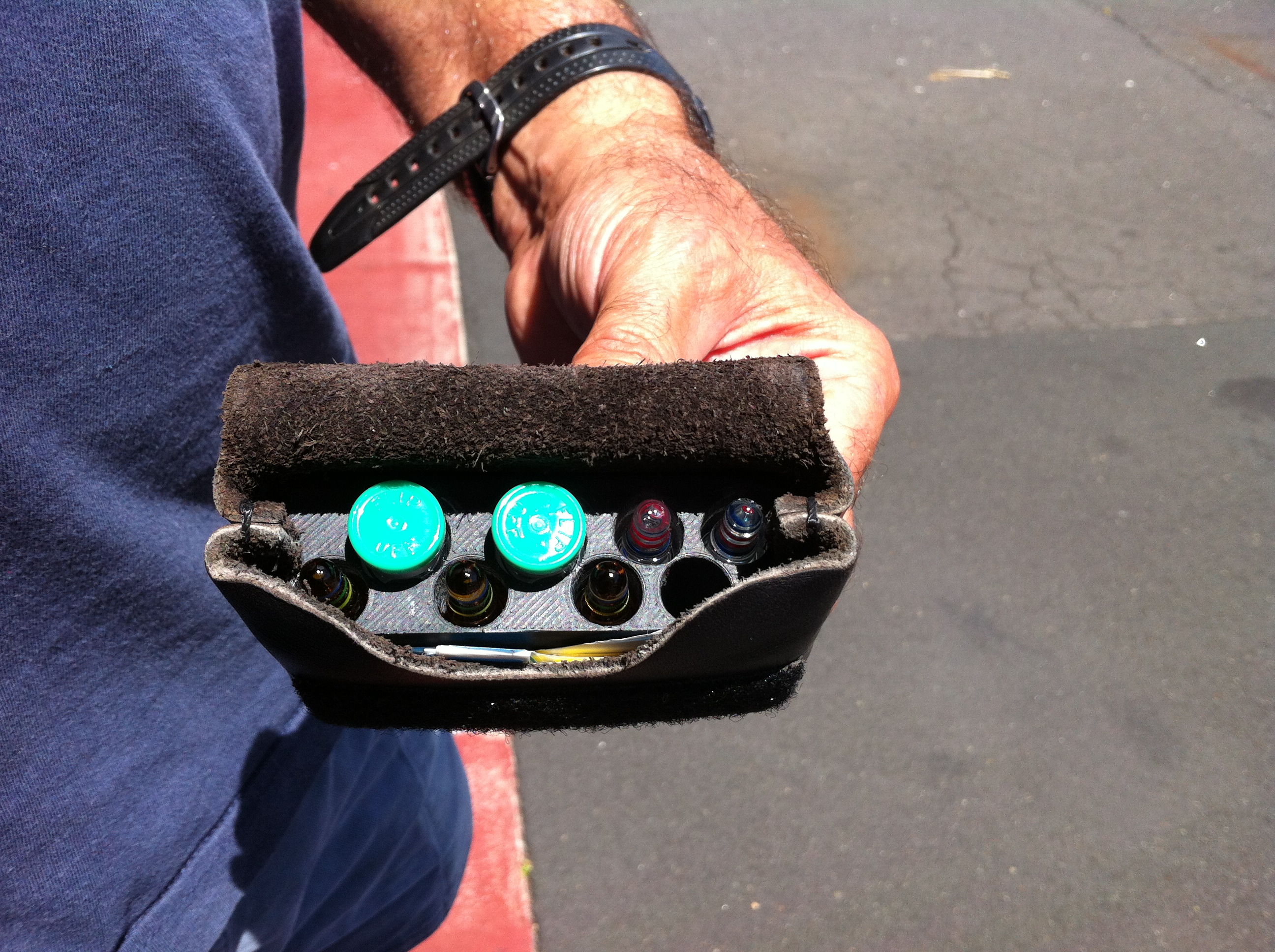
In January 2014 the weaknesses of the traditional leather and closed cell foam belt pouch were discussed: Care for your controlled drugs – a 3D printer solution.

The innovative 3D printed vial insert greatly improved vial breakages. Review of the insert’s function identified two failings: Firstly occasional vial breakage occurred; Secondly the Morphine ampules abruptly began to get stuck within the insert. The first problem seemed to arise due to downward blows onto the expose vial tops. The second problem was tracked to a change in the manufacturers label thickness only affecting the Morphine ampules that led to the vials jamming in the precisely moulded insert. 

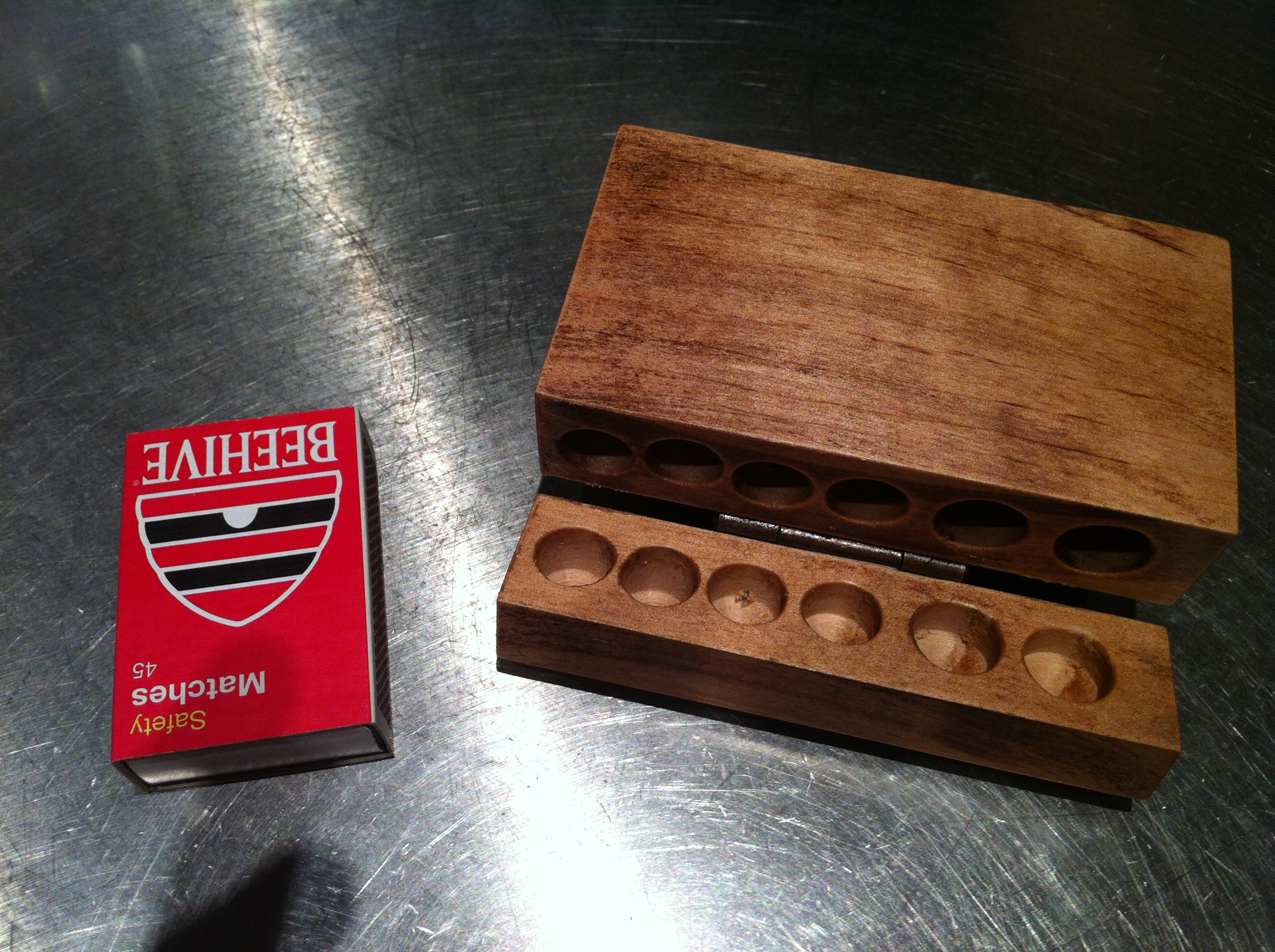
These difficulties prompted a search for solutions. The further evolution of the drug pouch followed the realisation that an insert could become the whole carriage system and protection from downward forces would be required to stop breakage. 

Evolutionary Steps

Original leather pouch with the 3D printer insert  

Image


Wooden prototype protecting vials in up to 2m falls onto concrete

Image


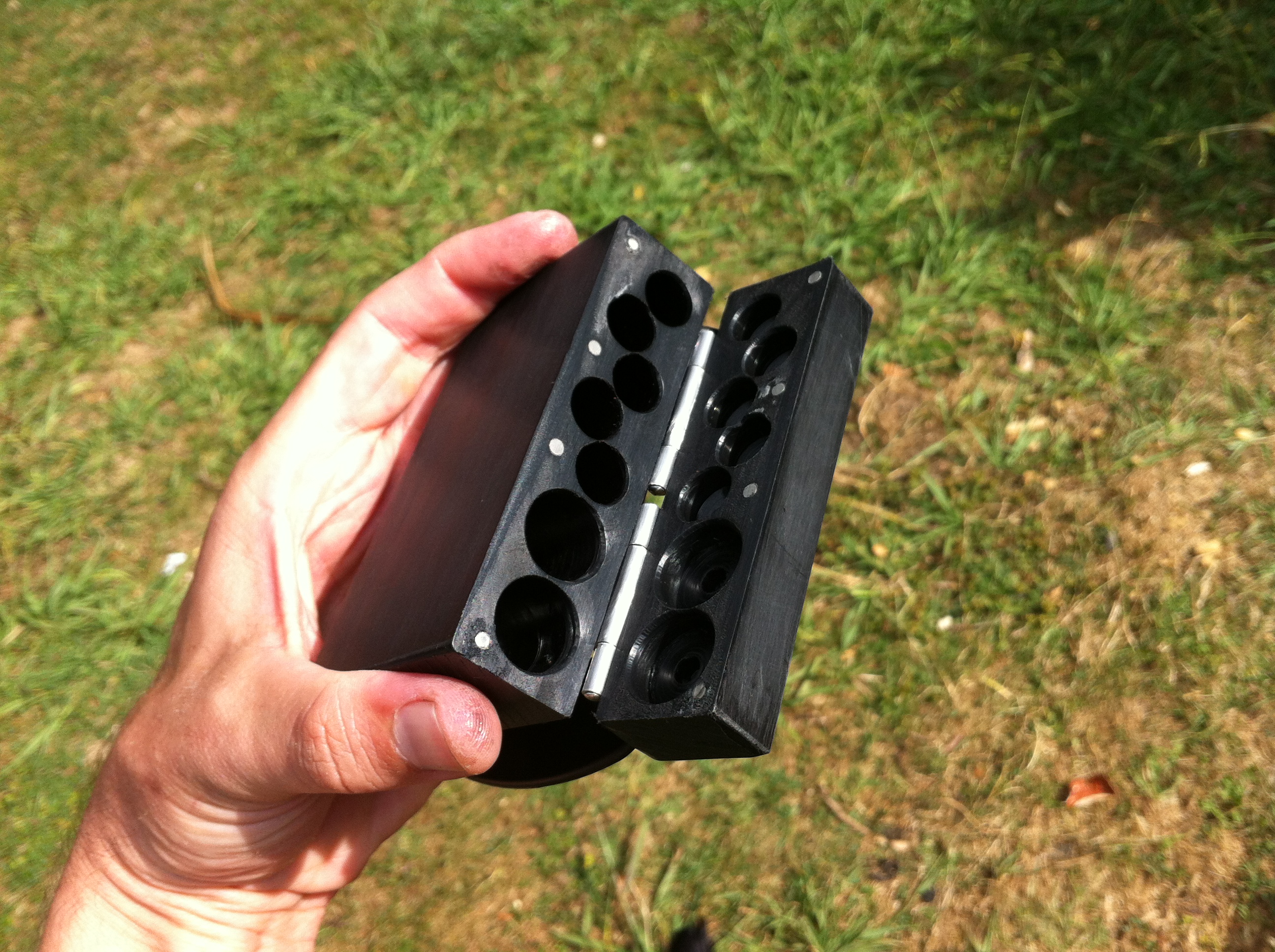
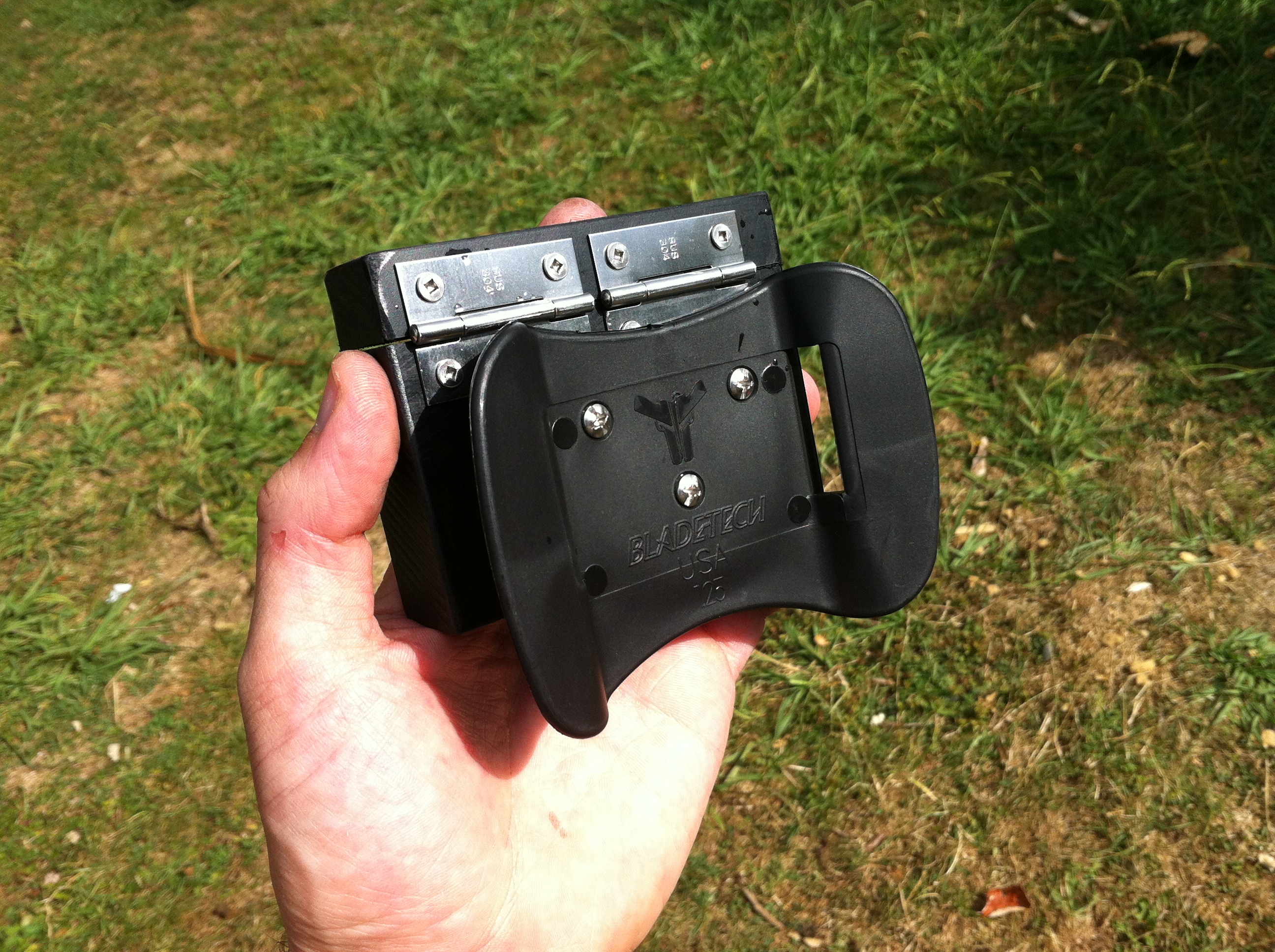
HDPE vial holder showing magnetic catches, stainless fastenings and moulded belt loops

ImageImage


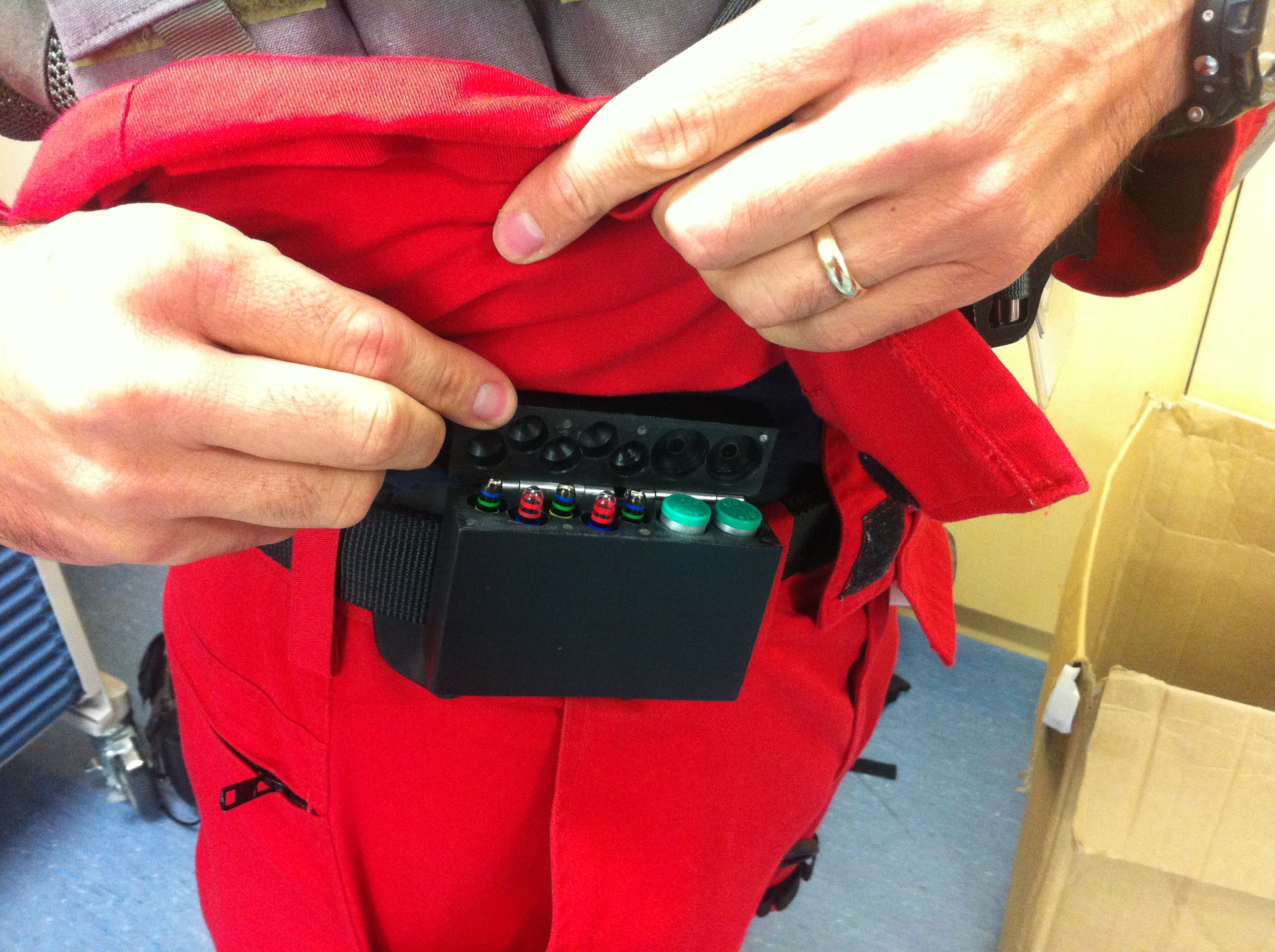
Controlled drug carry system in use


Image

Some of the successes of the system include: A durable non-porous material capable of wash down and disinfection; magnetic catches; silicon rubber seated vial wells for shock absorption. 

Current feedback from the austere clinical environment is that the system is working well.


Care for your controlled drugs – a 3D printer solution

Controlled drugs have long been carried by clinicians in a leather pouch on the belt. Closed-cell foam inserts surrounded the vials to provide impact and deformation protection to the glass vials. The original pouch was designed to carry Opiates and with the addition of Ketamine these new vials were placed either above or below the foam insert. There was no room to incorporate further vial spaces in the closed cell-foam as wide cushioning margins were needed to provide impact protection. Due to the harsh prehospital environment vial breakage was common and appeared to be related to both loose vials and the ability of the closed-cell foam to flex. Rebuilding the pouch to a larger size had the concerns of greater size, weight and cost and could not solve flex related breakages. 

The solution came from pilot Armin Egli who overheard the failings of the controlled drug pouch. His answer was to design and make a rigid plastic insert by 3D printer. This insert fits the vials precisely preventing rattling. The vial insert depths are tailored to the vial sizes to allow ease of vial removal while maintaining maximum protection. As the inserts are rigid the vials can be closely stacked allowing the original pouch to fit all the current vials carried with a spare slot.

There have been no known vial breakages with the new insert and only positive feedback has been heard. This was a reminder that any member of the team may have the solution to a problem and often the most innovative answer comes from an interface between skill sets. The alternative explanation is that a man who can single handedly make a helicopter simulator can make whatever he likes.

IMG_1238

A Military Aviation model for Patient Safety?

In the September 2013 edition of the British Medical Journal, Robyn Clay-Williams has published a thought provoking article on the modelling of clinical risk management on civil aviation practices, and questions whether a military aviation model may be more prudent when assessing and managing risk in the healthcare environment.  The abstract can be found HERE.

The author questions the appropriateness of translating sometimes rigid civil aviation processes (and a zero tolerance for risk) into healthcare, as some healthcare systems (such as emergency departments and intensive care units) need more flexibility and autonomy in their workings and risk management. She suggests managing risk in high stakes clinical environments such as these would be more conducive to a military aviation model – the parallels being teams with limited resources who deal routinely with unpredictable situations, complex and time critical operations (as would happen frequently in the pre-hospital environment or the ED resus room).

Suggestions for improving the adaptability and resilience of health care organizations in the realms of risk management derived from a military model include:

  • planning for the unexpected
  • training for the worst: simulation training of worst case scenarios allows decision making under pressure and can help develop spare capacity
  • training disparate teams together: multidisciplinary and inter-departmental simulation training
  • learning about the limits of human performance
  • supported simulation allowing development of
    • self-awareness
    • contingency planning
    • communication skills.

At Auckland ED we have begun multi-disciplinary simulation afternoons with other clinical departments, out first event included HEMS, Emergency Department, Trauma Surgery, Cardiothoracics, Anaesthetics and Operating Theatres.  This was invaluable in ‘testing the system’ involving handover, clinical management, resourcing (labs, radiology, blood bank, theatre) and most especially inter-departmental communication and teamwork.  Our first simulation has garnered resounding positive feedback from all involved.

I would be interested in comments from others who are doing inter-departmental simulation and team training.

Click HERE for the full version of the article discussed above (secure area limited to ADHB staff)