Recently I had the pleasure of attending a superb AWLS course in Queenstown. The course was run by a group of intrepid clinicians who decided several years ago to import AWLS from the United States. You can read about the group (and more importantly, book a place on the course!) here:

Wilderness medicine is in may ways the ultimate in prehospital care – it involves providing care to patients in an frequently austere environment with often very limited personnel, equipment, and communications. For emergency department doctors like myself, it also separates us from the security of readily accessible diagnostic investigations.
At its core wilderness medicine represents the same pathologies as emergency medicine, although environmental issues are obviously more common than in our urban ED and regional HEMS (check out this article about some recent lightning strike patients treated in Waikato ED!). The challenges encountered by treating clinicians however are very different, and solutions rely on communication, improvisation, adaptation, clinical judgement, and common sense… plus (of course!) duct tape and a pocket knife.
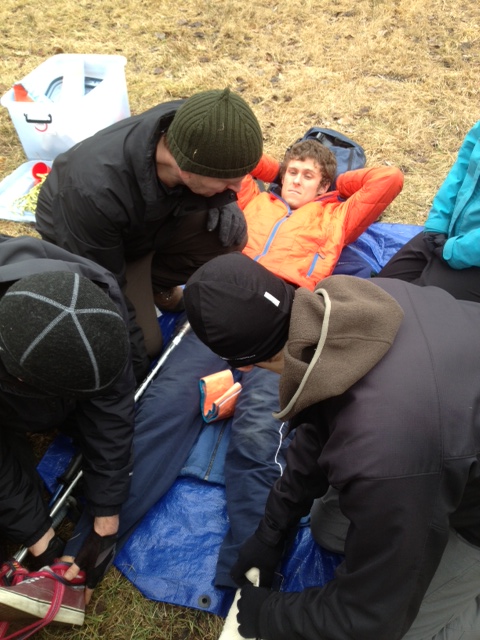
The course itself included a variety of teaching formats including interactive lectures, group discussions, practical skill stations, and in-situ simulation. The organizers successfully arranged significant rainfall on one of the simulation afternoons – ever tried running a trauma resuscitation in the rain under a tarpaulin? (Credit is also due here to some of the local medical students, who were quite willing to become hypothermic for the sake of medical education)
Without giving away too much of the detail on the course, here are some examples of the material covered:
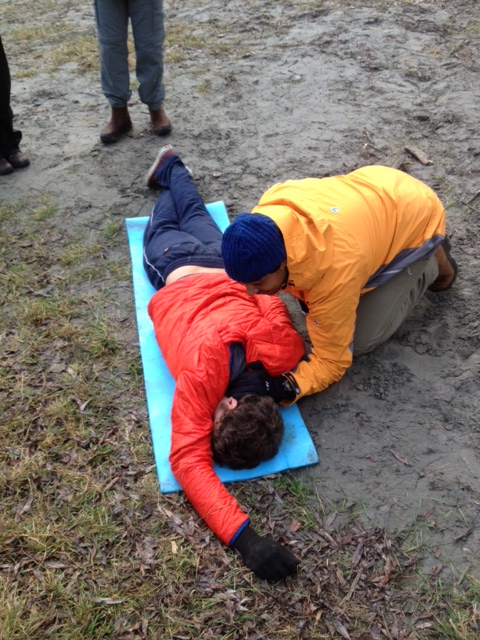
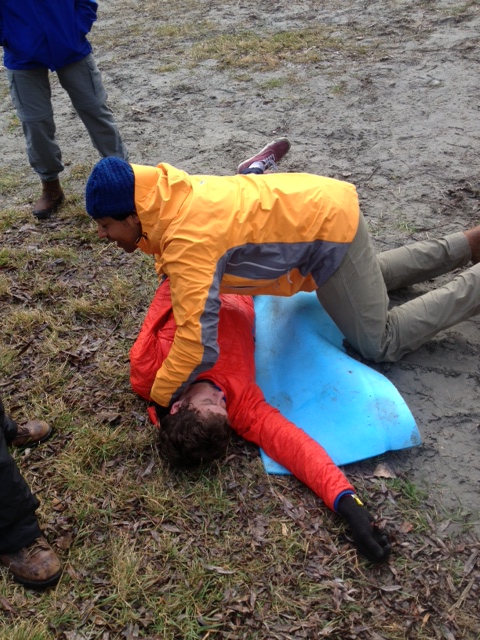
Single rescuer rolling a trauma patient with cervical spine control:

1
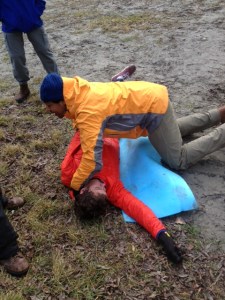
2

Improvised rope sling carry for patient unable to walk

Improvised cervical collar

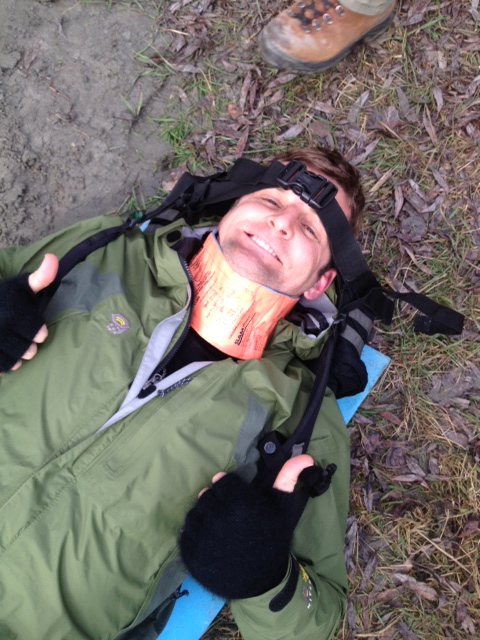
C-spine immobilization with Sam splint/backpack, alternatively device for restraining combative ED consultant – Logan Stuckey from Nambour

Splinting of fractured femur with ski pole
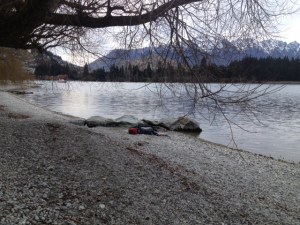
In situ simulation: Body on the shore – what will you do?
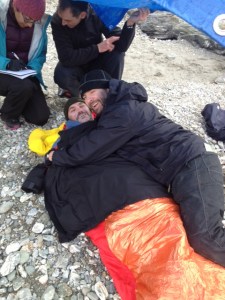
Pre-hospital external warming device (at least, that was the explanation given)

Resuscitation team in the rain!





 Auckland HEMS