Error
This video doesn’t exist
Yours truly in action
(video from prehospitalmed.com)
<iframe src=”http://new.livestream.com/accounts/1589715/events/1933170/videos/13690334/player?autoPlay=false&height=360&mute=false&width=640″ width=”640″ height=”360″ frameborder=”0″ scrolling=”no”></iframe>
I have just had the pleasure of attending the SMACC (Social Media And Critical Care) conference in Sydney – wow!
Any thoughts that this conference was going to be the same as many college scientific meetings were rapidly dispelled when the (alleged) ‘welcome’ speaker, who was delivering a tedious stuttering analysis of statistical irreleventia was picked up and thrown from the stage (with his lectern) by a masked wrestler wearing the SMACC logo.
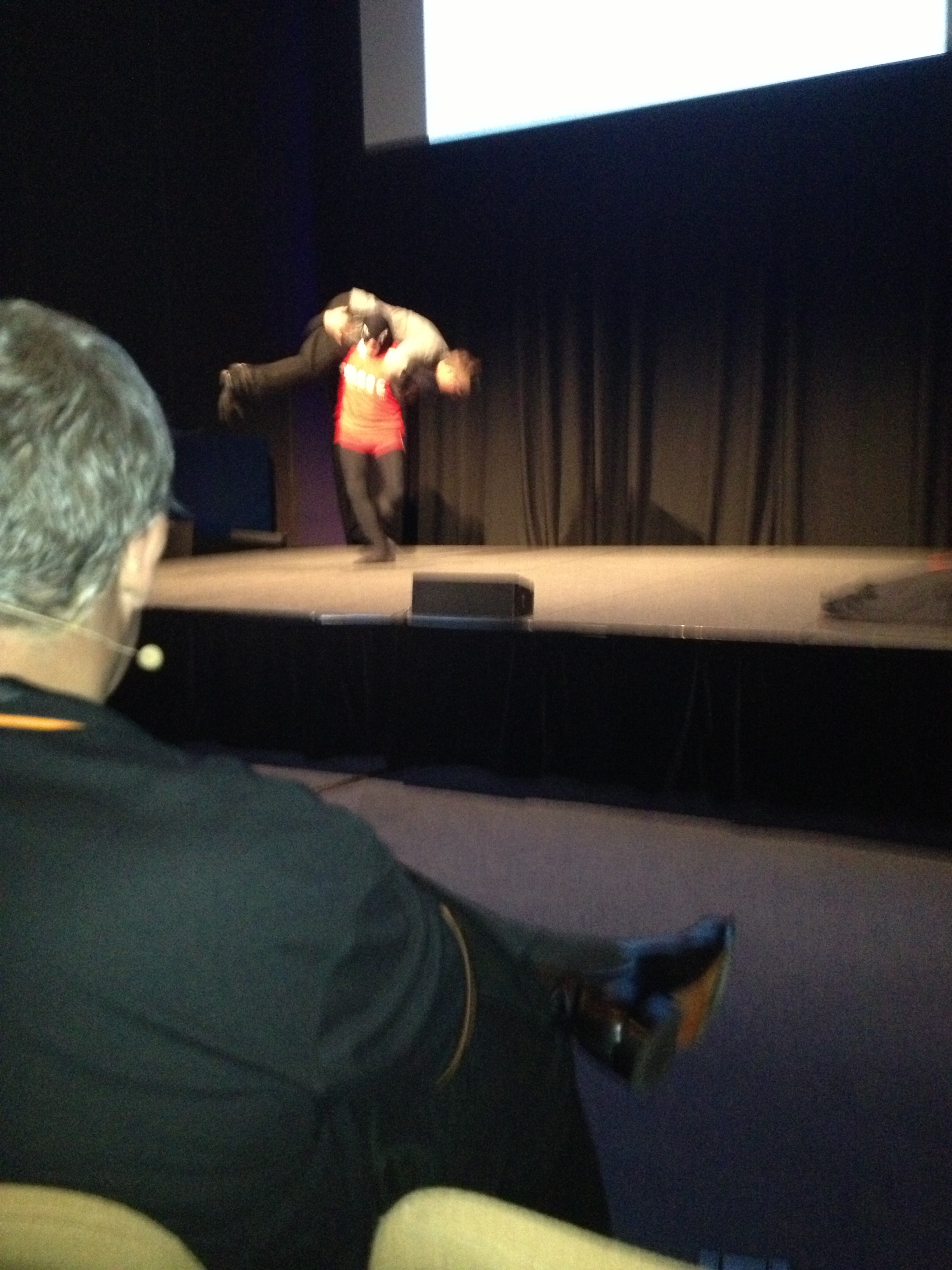
Another one bites the dust! Photo from prehospitalmed.com
From the first sessions of the conference it became rapidly apparent that most of the audience were far more Twitter-literate than I was. At first I thought it was a sign of rudeness that over half the audience were tapping away on various mobile devices while speakers were delivering their talks; I then realized that most of the activity was people sending out ‘tweets’.
Each person was tweeting to several hundred people at once.
Tweets contained the speaker’s key ‘take home messages’ and pearls of wisdom, complete with pictures, slides, and links to resources.
It dawned on me that this was instantaneous dissemination of cutting-edge medical information and ideas across oceans and borders.
(plus, of course, the presumably drunken tweet from the Gala Dinner: “F@#$ yeah! This vegan dinner is the s#!t!”)
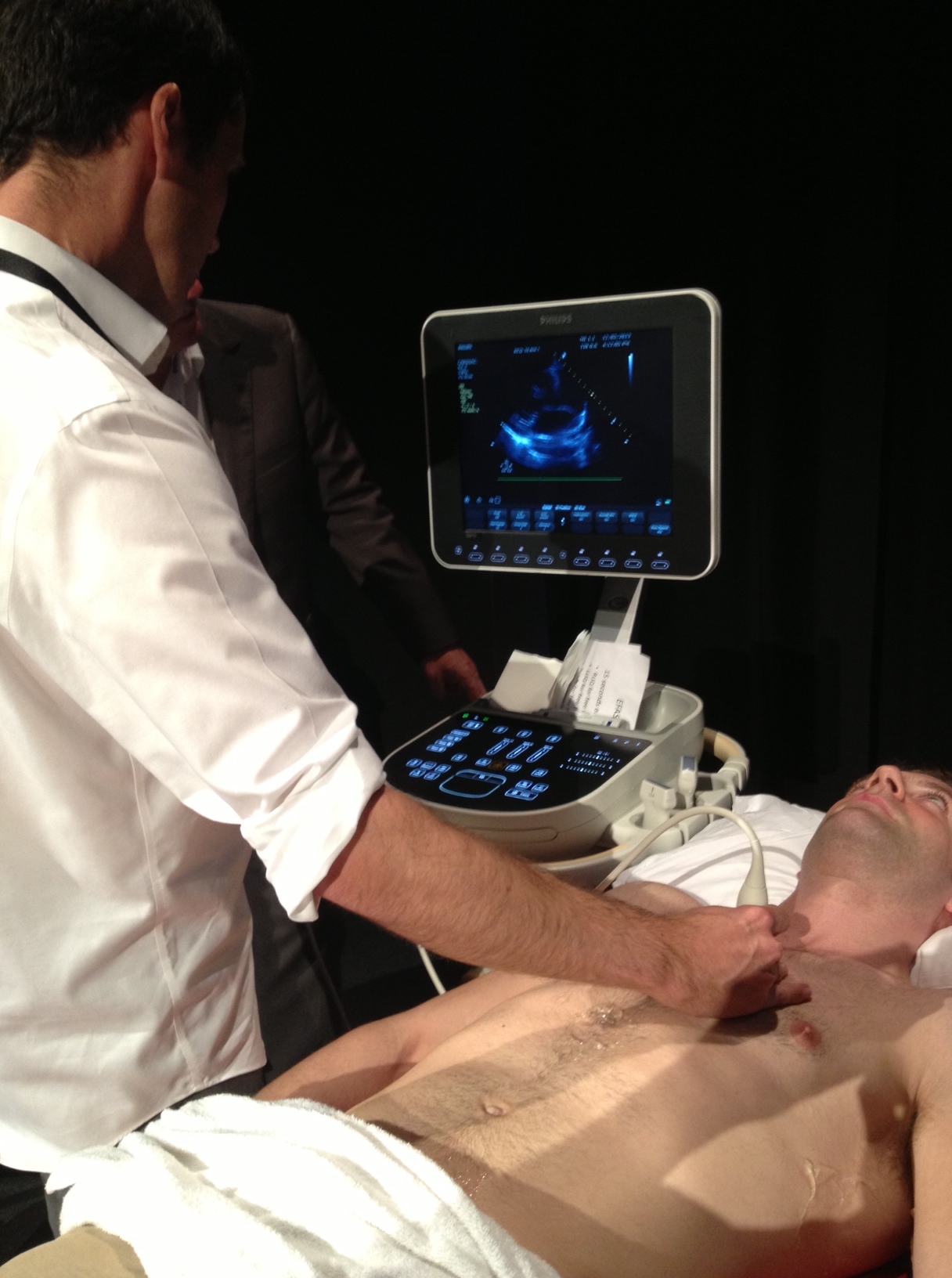
AucklandHEMS in action: Chris Denny competing in Sonowars
The power of social media for medical use was brought home to me in a talk delivered by Minh Le Cong about airway management.
He played a video of a recent intubation he performed in the retrieval setting., involving a combative patient with a predicted difficult airway, hypoxia despite high flow oxygen via a non-rebreather, and bilateral pneumonia.
This is the sort of clinical scenario that gives acute care doctors and paramedics nightmares, but Minh navigated it successfully with a delayed sequence intubation (premedication with fentanyl allowing enough behavioral control to pre-oxygenate), pre-oxygenation with BiPAP instead of a traditional BVM, providing apneic ventilation with nasal cannulae during the period of paralysis, and placing a Fast-Track (an intubating LMA device) prior to passing a tube through it.
Some of the key elements of airway management listed above have been disseminated largely through social media over the last year. They have been blogged, tweeted, podcasted, vodcasted, and facebooked – not just the techniques themselves but people’s experiences, cautions, and refinements. The end result is that changes in practice have occurred in a timeframe that five years ago would not have been possible. Relying on traditional media (peer-reviewed journals and textbooks) places the timescale for changes in clinical practice into years.
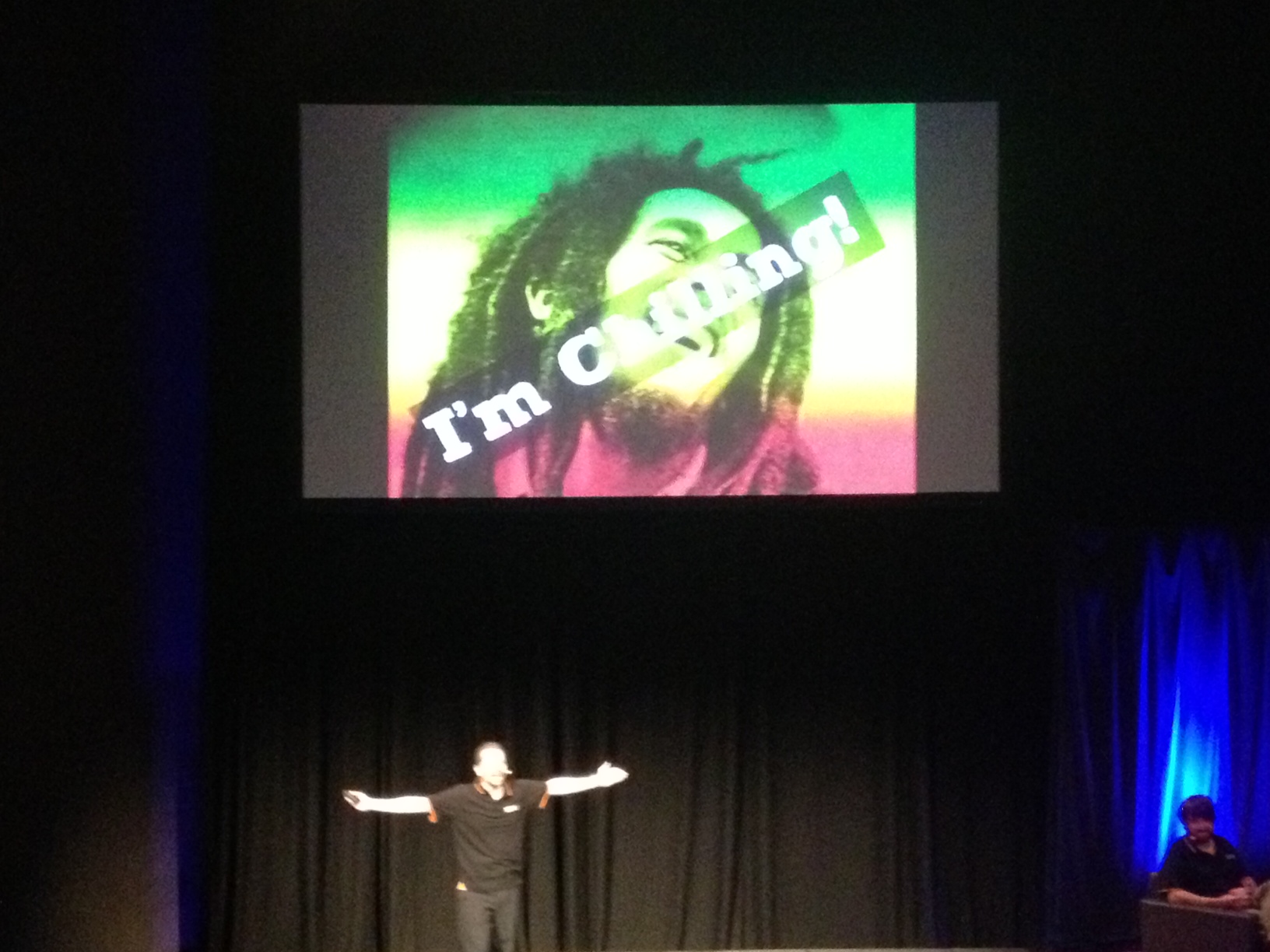
Scott Weingart explains why patients drop their blood pressure once anaesthetised
Clearly there are risks associated with this sort of process. The internet represents pure anarchy when it comes to information dissemination, and it would be very easy for dangerous misinformation to be presented as gospel, aided by slick-looking multimedia pieces (have a look at some of the NZ anti-immunization websites if you want to see misinformation presented in a nice-looking pseudo-scientific form!). A considerable proportion of the conference involved discussions around ways dealing with the uncontrolled nature of FOAM (free open-access meducation) via social media – whether regulation and oversight is needed, how to deal with disputes and misinformation, and how academic colleges (which rely heavily on preset curriculums and traditional media).
The answers to these questions are far from clear.
Having spent the SMACC conference observing the power of social media (specifically for FOAM), I came to the following conclusions:
1) Social media for FOAM is tremendously powerful, and it is here to stay. We should embrace it as a teaching tool.
2) The power of FOAM lies in the ability to transmit not just medical information, but EXPERIENCE – i.e valuable lessons that you would otherwise learn the hard way in resus or on the road.
3) Although there are risks in using FOAM, the benefits vastly outweigh them.
4) There is a moral (but possibly not legal) responsibility on the part of someone producing/disseminating FOAM material to ensure that it is as accurate as possible.
5) The legal responsibility for translating FOAM material into clinical care ultimately lies with the clinician who provides care to the patient
Conclusion 5 is potentially vexatious for clinicians – how do we know what is valid/safe and what is not? Stating “I got this technique from a blog’ is not a defence in the setting of a medicolegal disaster.
The way I have reconciled this is that before applying FOAM material in clinical care, I must make a judgement as to the safety of information, the validity (or otherwise), how and whether it applies to the patient in front of me, how to manage the risk, what the accepted standard of care (and the supporting evidence) is in similar situations, and whether my decision would be defensible in the event of a poor outcome.
Sounds like a complicated and risky process, doesn’t it?
It’s called the Art of Emergency Care, and whether FOAM is involved or not, we are ALREADY doing it every day.
As demonstrated by the previous post, studies that show a benefit for HEMS receive significant exposure within the medical and prehospital community. Due to the nature of the work, often relatively short times providing care to patients, and heterogeneity of patient/pathology/environment, benefits in terms of statistically significant improved patient outcomes are difficult to demonstrate.
In this post, I thought I’d outline some of the non-measurable benefits that have resulted from the advent of the Auckland HEMS (specifically by combining the existing paramedic/crewman team with a hospital-based doctor).
1) Improved understanding influencing ED care
Those of us who have ventured into the prehospital environment have gained a new understanding of the specific challenges involved, including those around the interface between the prehospital and hospital environment. With our newfound experience and the guidance of our paramedic colleagues from St John and ARHT, the way patients are handed over by prehospital staff and received by ED staff has evolved. This is best explained in this post, which contains a video demonstrating an effective handover template and use of a whiteboard for significantly unwell patients. As an ED doctor receiving patients and leading a resus team , this sort of process feels like significant improvement in patient care – even if proving it with statistics would be just about impossible!

Auckland ED ambulance bay
2) More communication and teamwork
While working in HEMS, we have built relationships with pilots, crewmen, paramedics, and other ARHT employees. What has been surprising however is the extent to which communication has changed between ED doctors (not just the HEMS doctor team) and our St John paramedic colleagues who are NOT directly involved with the Westpac Helicopter. In addition to evolved handovers as discussed above, there seems to be a lot more dialogue between paramedics and doctors in our ED. We are fielding more questions and requests for feedback about patients that are delivered to us, more clinical queries and requests for information in general, requests for paramedics to attend ED mortality/morbidity reviews where appropriate. Speaking for myself, this a two way process – with more of an understanding of how the prehospital setting works, I can now request additional information from paramedics with the aim of improving the care I deliver.
Recently, the benefits of more communication and dialogue were demonstrated to me when two St John paramedics who had delivered a critically ill trauma patient became active resus team members a considerable time after their handover. I was leading a team dealing with severe haemorrhagic shock, a massive transfusion requirement, extremely poor vascular access, a reduced LOC, and a predicted difficult airway. The patient also had multiple long bone fractures, and with all the doctors in my team tied up dealing with the other issues, the two paramedics rapidly and effectively splinted the fractures for me. (Thanks guys – and feel free to leave your Sager traction splint in the ED annnnny time you like…!) I am unsure whether this sort of collaboration would have occurred prior to the ‘cultural change’ that seems to have arrived since the advent of HEMS, but now it feels like there are no barriers in place.
A valuable addition to the ED team..
3) Active safety management
Placing hospital-based doctors in an aeromedical setting exposes them to the systems required in aviation, including those regarding safety management (watch this video if you haven’t already!) Medicine is traditionally some years behind aviation with regards to active safety management, and while aviation systems cannot be directly be ported directly to medicine (this, plus the process of moving on from aviation learnings into ED-relevant material is discussed on Resus Room Management – a great site that is well worth a look), there is much we can learn.
The involvement of the helicopter crewman in the medical resuscitation team lent itself well to checklist use (crewman have a lot of experience with checklists!), and the Auckland HEMS RSI checklist was the end result. The familiarity with checklists has started another culture change in our ED, and people are starting to realise their value. While Auckland ED has not yet adopted a formal RSI checklist, versions are already being used in our resus rooms, and have the potential to significantly improve the safety of our advanced airway management.
Involvement in HEMS has also allowed the medical team to gain experience with an online safety management system. ARHT uses Air Maestro, which is now being used by the trust to cover medical as well as aviation issues (many thanks to Armin Egli and Paul Robinson for sorting this one out!). While introducing something like this to ED would be a difficult undertaking, gaining experience with it through HEMS allows us to explore the medical uses while seeing in real-time how it improves the safety of aviation operations. Food for thought…
The comments above represent my thoughts about some of the non-measurable benefits of the Auckland HEMS trial. I’d love to hear your thoughts, please post comments below if you wish.
 Auckland HEMS