
Tag Archives: equipment
Helicopter cabin design for emergency medical services and interhospital transfer
Reply

AW169
ARHT is purchasing an AgustaWestland AW169, due for delivery in 2015. This provides an opportunity to to create a purpose-built interior that will best serve the helicopters mission profiles, and a considerable amount of planning is going into this.
This paper, published in Air Medical Journal 2012, details how specific cabin elements were designed and constructed for a German EC145 (the successor to the BK117 that the ARHT currently operates). Key to the design was a sliding module containing essential medical and monitoring equipment – the module can slide a considerable distance out the rear doors of the helicopter to aid the process of loading/unloading ventilated patients with lots of monitoring equipment in situ.
Full-text pdf of this article is available here (secure area limited to ADHB staff only – ADHB maintains an online subscription to this journal through the Philson Library at the University of Auckland School of Medicine)
Simulation Exercise Thursday 6 December – Equipment Usability Testing

Did that cursed plastic mannequin expire last time despite your best efforts to resuscitate it?
Well, here is your opportunity to try again!
WHAT: Equipment Usability Testing
WHEN: Thursday 6th December, 1900-2130
WHERE: Marine Rescue Coordination Centre, Mechanics Bay
The focus for this exercise is not to assess you or your team’s performance, but to assess different equipment configurations. Sam Bendall has once again cooked up a variety of fiendish scenarios that will force you to raid the deepest recesses of your medical kit.
With a variety of kit configurations to try, the aim is to build on the learnings from the Brown’s Island simulation exercise and explore how our equipment could/should be improved.
This is YOUR opportunity to experiment with different kit configurations and have a say in which direction the HEMS medical kit should go.
See you there!
Weinmann ‘Medumat Transport’ Ventilator
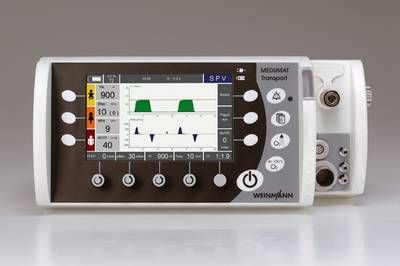
These slide sets were provided by Weinmann for training purposes.
The following 3 slide sets cover use of the ventilator, ventilator modes, and how to interpret the monitors on the display
1) Medumat Transport Product Training – Essential viewing – overview of switching on, function test, and placing patient on ’emergency’ ventilation (preset IPPV parameters for adult/child/baby) and more advanced ventilation modes, including NIPPV
2) Ventilation – Review of different ventilation modes
3) Monitoring – Review of monitoring available on ventilator display and how to assess quality of ventilation
—————————————————————————————————————–
The following 3 slide sets review respiratory anatomy and physiology
1) Anatomy – Review of anatomy relevant to ventilation
2) Physiology & Pathophysiology – Review of respiratory physiology relating to ventilation
 Auckland HEMS