Unknown's avatar

About Scott Orman

Emergency Medicine Specialist, Auckland Hospital; Auckland HEMS Doctor

“The best lecture on airway management – ever?”

In the continuing aucklandhems.com theme of not reinventing the wheel, here is a superb video podcast of a lecture about airway management by Dr Richard Levitan – emergency physician and airway guru.

It focuses on laryngoscopy, including techniques for improving your view, bimanual laryngoscopy, positioning and head elevation, apnoeic oxygenation, avoiding common pitfalls, and understanding the dynamic elements of airway anatomy.

In our prehospital setting, good laryngoscopy technique (or, as Dr Levitan puts it, the sequence of epiglottoscopy —> laryngoscopy —> tube delivery) is the cornerstone technical skill of airway management – not a Glidescope in sight!

This podcast was sourced from Scott Weingart’s emcrit.org

The slide set for the talk is here

The video podcast is here

The landmark paper Preoxygenation and Prevention of Desaturation During Emergency Airway Management (by Drs Levitan and Weingart) is here

Laryngoscope-Handles-L

Application of the Crewman’s Dictionary

In view of our upcoming ‘Equipment Usability Testing’ session, the following was circulated amongst the Auckland HEMS staff:
——————————-
I) Here is one approach to the assessment of the ergonomics of a space:
  1. Attention and alertness
  2. Safety-critical information
  3. Position, placement and orientation of equipment
  4. Proximity of task, equipment and materials
II) Another approach (International Workplace Studies Program @ Cornell) emphasizes:
  1. Functional coherence
  2. Facilitation of communication
  3. Facilitation of task accomplishment
  4. Adaptable space

The Auckland HEMS doctors are fortunate to work closely with the helicopter crewmen. One of the many important functions the crewmen serve is to keep the doctors on Planet Earth. With this in mind, Herby Barnes (Crew Chief/Q.A. Manager) has consulted the crewman’s dictionary and provided the following real-world translation of the points above:

Approach I)

1.     If you didnt hear me the first time then go back to bed
2.     A thumb does not mean you look good in that jumpsuit
3.     Are you sure you’re in the right seat ?
4.     If you cant reach it MOVE !!!
Approach II
1.   Yes I am bigger and heavier and sometimes I may need to crawl all over you, so please do not get caught under me, we dont want another patient. 
2.   If you’re not kissing the MIC to talk, hand gestures are preferable to eyes or facial expression.
3.   Do your job or get off the machine.
4.   A space to secure extra crap that may be required, or recovered from the scene.
5031847
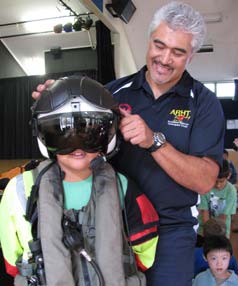
Given how slow HEMS doctors are at learning any practical helicopter-related matters, Herby has started their training at age 8

Simulation Exercise Thursday 6 December – Equipment Usability Testing

mannequin

Did that cursed plastic mannequin expire last time despite your best efforts to resuscitate it?

Well, here is your opportunity to try again!

WHAT: Equipment Usability Testing

WHEN: Thursday 6th December, 1900-2130

WHERE: Marine Rescue Coordination Centre, Mechanics Bay

The focus for this exercise is not to assess you or your team’s performance, but to assess different equipment configurations. Sam Bendall has once again cooked up a variety of fiendish scenarios that will force you to raid the deepest recesses of your medical kit.

With a variety of kit configurations to try, the aim is to build on the learnings from the Brown’s Island simulation exercise and explore how our equipment could/should be improved.

This is YOUR opportunity to experiment with different kit configurations and have a say in which direction the HEMS medical kit should go.

See you there!

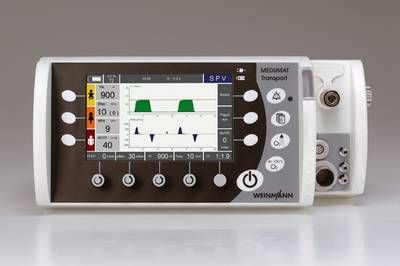
Weinmann ‘Medumat Transport’ Ventilator

These slide sets were provided by Weinmann for training purposes.

The following 3 slide sets cover use of the ventilator, ventilator modes, and how to interpret the monitors on the display

1) Medumat Transport Product Training – Essential viewing – overview of switching on, function test, and placing patient on ’emergency’ ventilation (preset IPPV parameters for adult/child/baby) and more advanced ventilation modes, including NIPPV

2) Ventilation – Review of different ventilation modes

3) Monitoring – Review of monitoring available on ventilator display and how to assess quality of ventilation

—————————————————————————————————————–

The following 3 slide sets review respiratory anatomy and physiology

1) Anatomy – Review of anatomy relevant to ventilation

2) Physiology & Pathophysiology – Review of respiratory physiology relating to ventilation

3) Physiologic basics of respiration