Principles of extrication


While the involvement of doctors and paramedics in extrication of trapped patients from cars is limited to medical rather than demolition aspects, it is important for us to understand the general process of extrication.

In particular, the two broad types of extrication are immediate extrication, which is used when patient demise is imminent, and controlled extraction, which is slower but carries less risk. Which of these two techniques the Fire Service use will depend partly on the medical advice they are given after entrapped patients have been assessed.

This paper provides a nice overview of extrication methods.

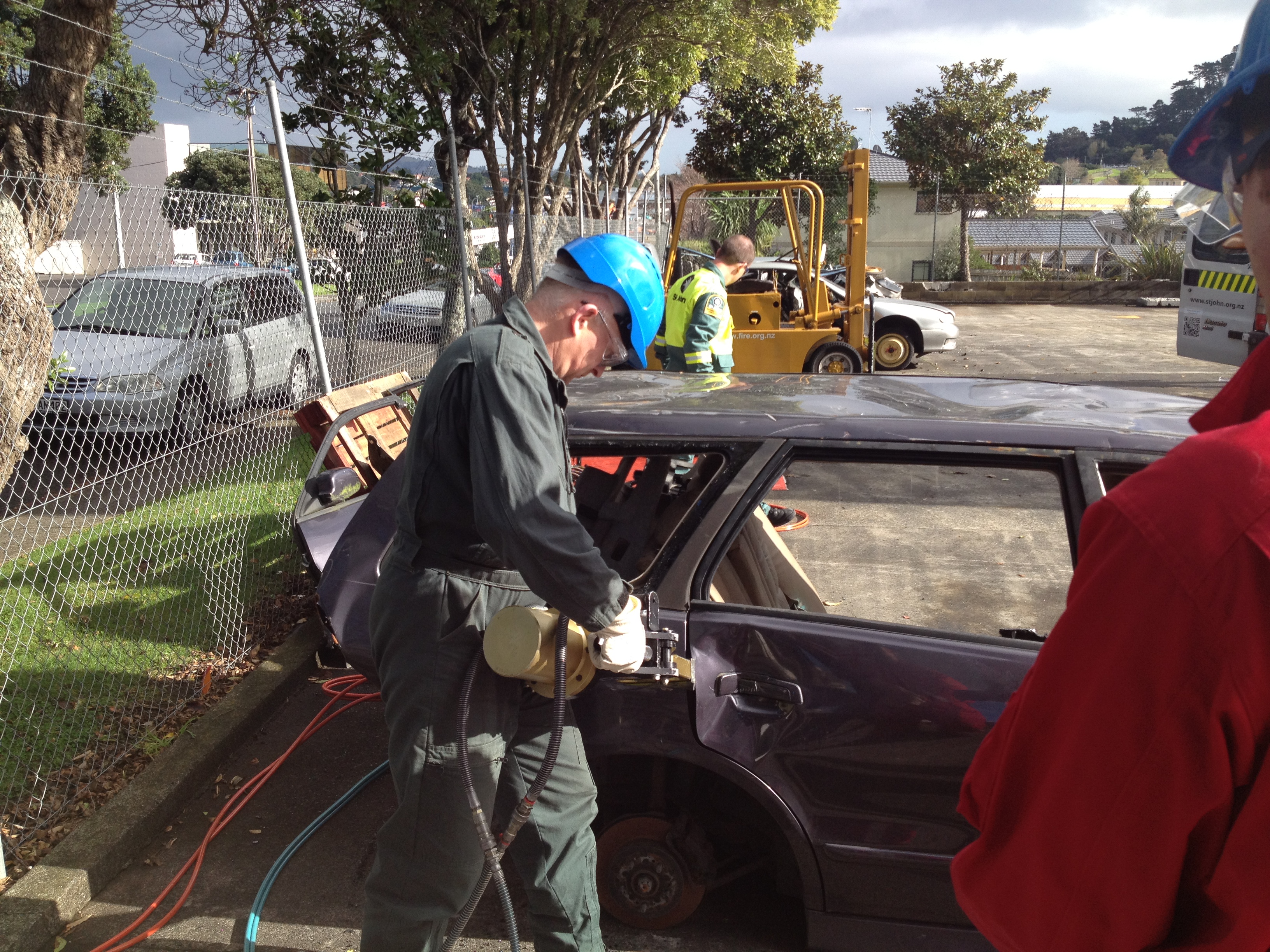
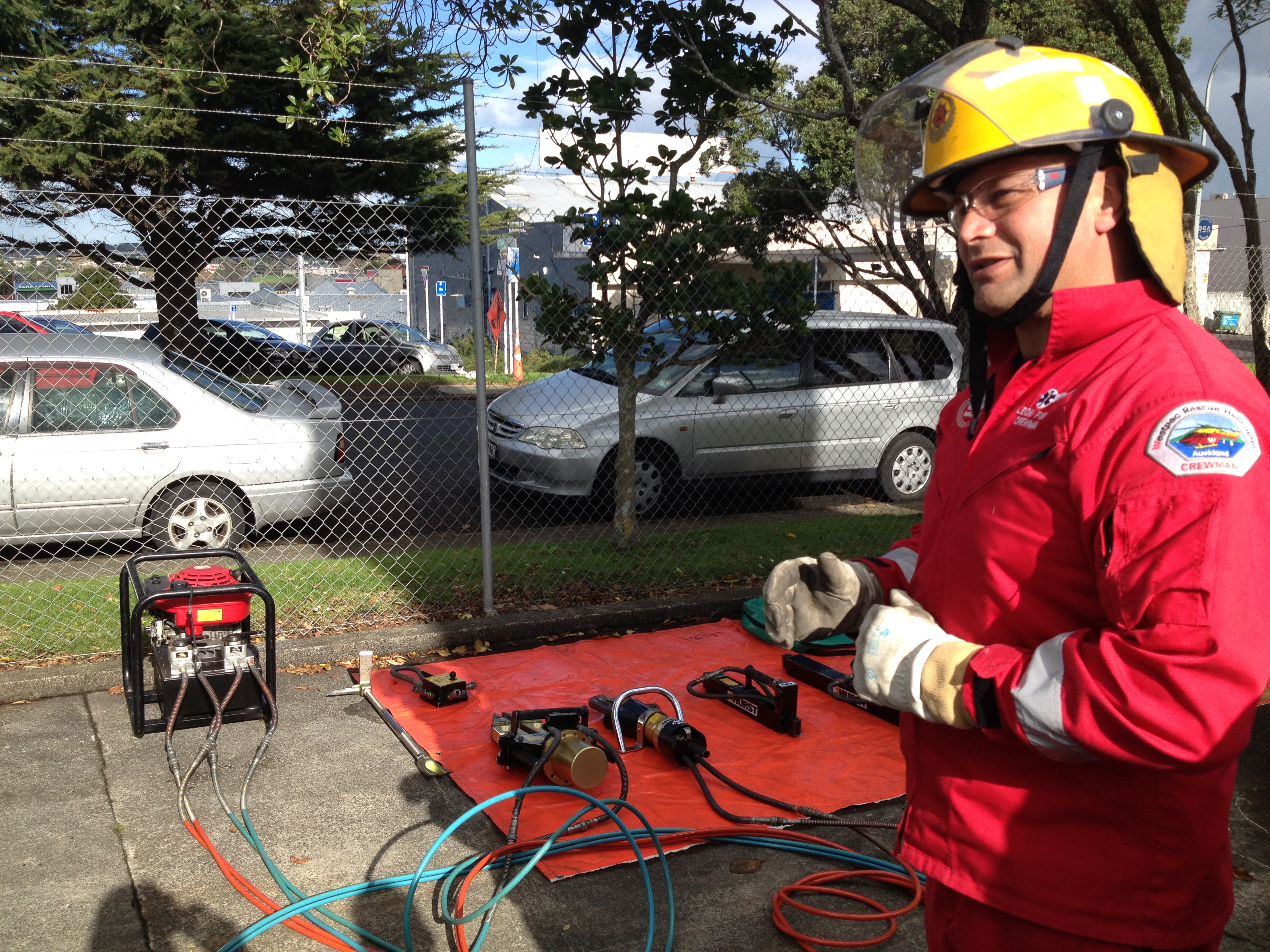
The photos below are from the ‘extrication’ section of the Careflight Prehospital Trauma Course, conducted in Auckland in 2012.

Leon Ford – the man to see for all your car demolition needs!

You won’t find these tools at Bunnings! Rusty Clark

Auckland ED Clinical Director, Tim Parke, trials a new device for chest drain insertion
Human factors and situational awareness in emergencies

The video below is one of the most striking (and tragic) examples around of the importance of human factors awareness, situational awareness, and leadership during emergencies. It details an airway emergency during a routine anaesthesia, subsequent events, and the reasons for those events. Although it occurs in the hospital setting, it is equally relevant for pre-hospital care.

It is a MUST VIEW for clinicians and other team members who deal with emergencies.

As a result of his personal experience, Martin Bromiley founded the Clinical Human Factors Group in 2007. This group brings together experts, clinicians and enthusiasts who have an interest in placing the understanding of human factors at the heart of improving patient safety.

In Just A Routine Operation Martin talks about his experience of losing his wife during an apparently routine procedure and his hopes for making a change to practice in healthcare.

This film was produced by thinkpublic for the NHS Institute for Innovation and Improvement.