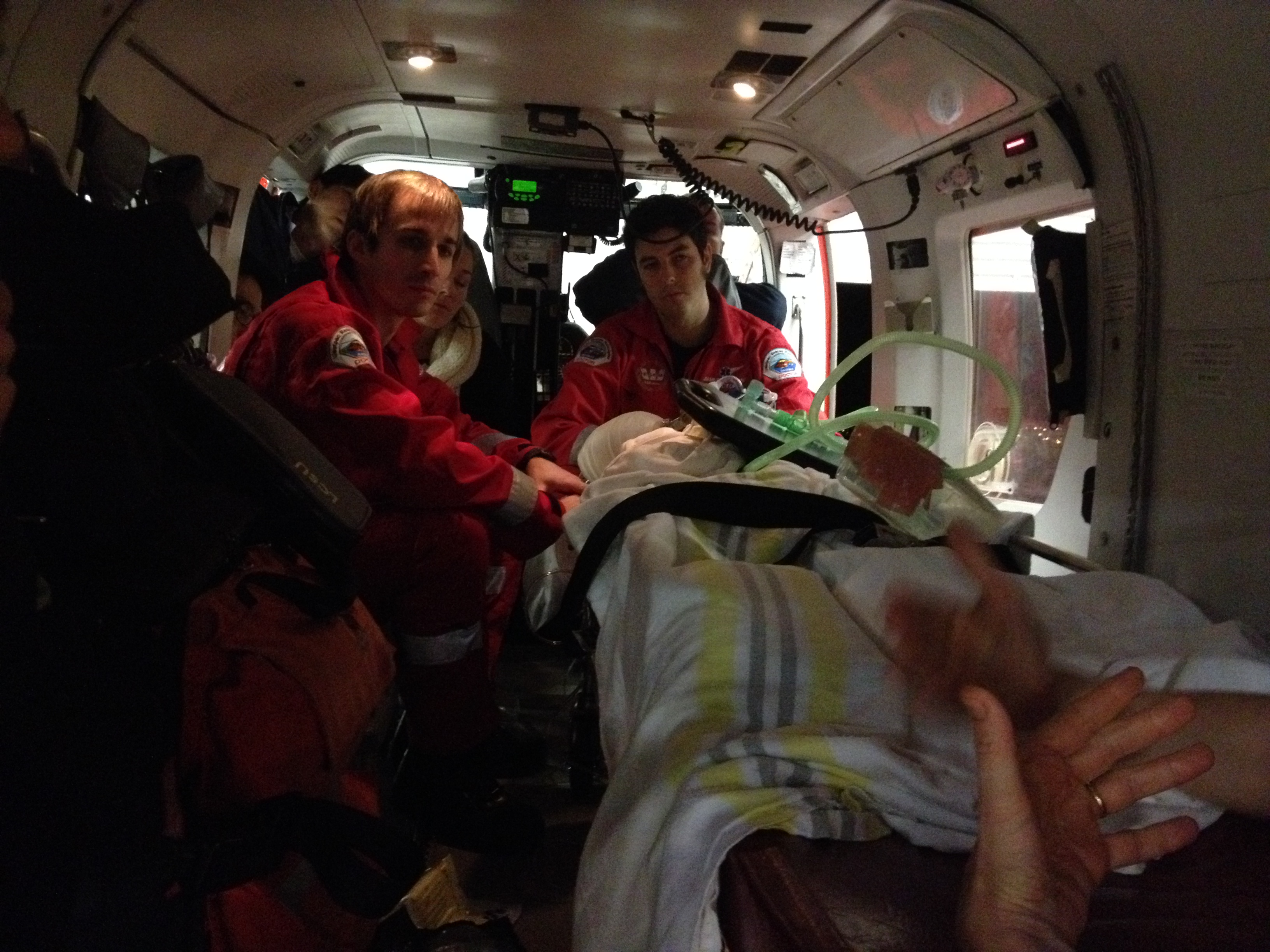
Test pilots wanted! Auckland HEMS app goes live

We are delighted to announce the release of the Auckland HEMS mobile app!

————————-

ALERT! January 2015: Since the publication of this post the app has been updated, including the launch of the Auckland HEMS simulation-based prehospital care curriculum podcasts. You can read  about the latest additions by clicking HERE

————————-

This app is a work in progress, and will be a living, dynamic project.

photo 2

Auckland HEMS home screen

We are very keen to have feedback regarding app development and improvement from the prehospital, aeromedical, and emergency medicine communities.

At the heart of the app are the emergency situation checklists that have been developed by Dr Robert Gooch (Canadian Emergency Medicine trainee and recent Auckland HEMS Fellow) and Dr Chris Denny (Auckland HEMS Medical Director).

Auckland HEMS also gratefully acknowledges the efforts of the pilots, paramedics, and crewmen who took place in the simulation-based usability-testing of the checklists, the work of Atul Gawande, and the international HEMS fellowship for allowing Dr Gooch to complete this patient safety initiative.
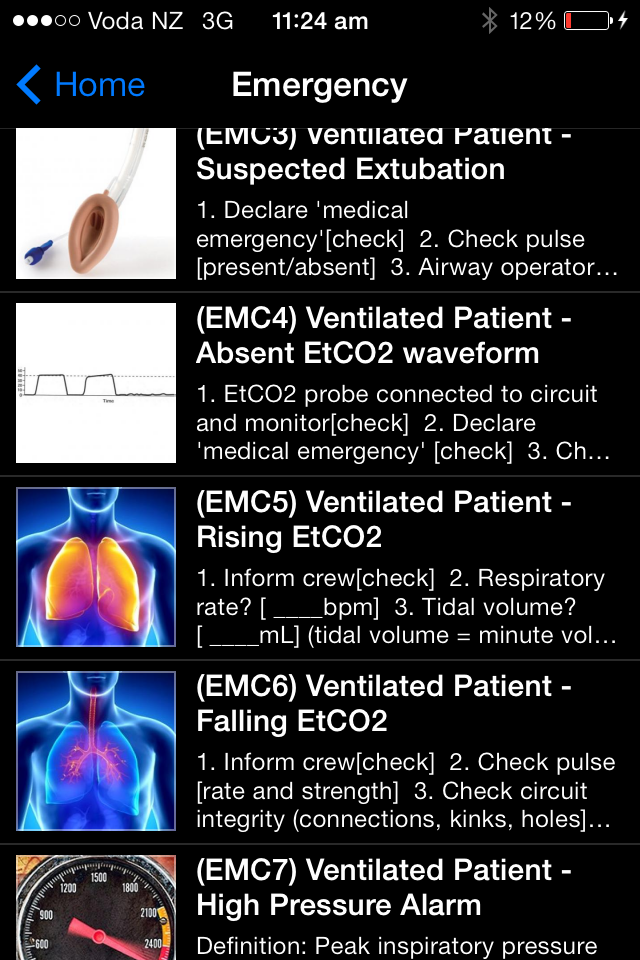
emergency checklist menu

The app also contains other clinical and non-clinical resources.

How can we make it better? We would like to hear your thoughts.

Please use the feedback button in the app, or post comments below.

The app was developed using a platform called ibuildapp‘. This is a web-based subscription service that has the following features:

  • straightforward user interface to construct and test the app – if you can create a powerpoint presentation, you can build an app!
  • NO coding required
  • apps created are functional on both iOS and Android
  • immediate updating – alterations to the master version will appear on user’s versions the next time they open the app
  • low startup costs compared to having an app professionally coded

The monthly subscription cost to Auckland HEMS increases as more users download the app. As a result we have had to introduce a small charge for iOS users to offset our ongoing costs. Due to some inflexibility regarding price alterations on Google Play (and a failure to read the fine print!), the app will remain free for Android users – it’s your lucky day…

No individual will make a personal profit from this project; any income above our development and subscription costs will go towards further app development and other Auckland HEMS educational and training activities.

uncle-sam-we-want-you

Our vision is to use a large team of ‘test pilots’ to make the app as effective as possible for clinical and operational use prior to creating a professionally coded ‘Auckland HEMS 2.0′.

ARE YOU UP FOR THE CHALLENGE?

A test pilot who WAS up for the challenge: Chuck Yeager and the Bell X1

A test pilot who WAS up for the challenge: Chuck Yeager and the Bell X1

Some improvement suggestions will be possible within the technical features of ‘ibuildapp’, but many will not, and these will be added to the future development list for version 2.0.

TO DOWNLOAD THE APP:

Click HERE for iOS users

Click HERE for Android users

Thank you for being a part of the Auckland HEMS team!
Auckland HEMS Checklist Reference Manual

Dear colleagues,

In June of this year our Canadian HEMS Fellow Dr. Robert Gooch shared one of our emergency checklists with the Prehospital and Retrieval Medicine (PHARM) community. Thank you to those of you who provided feedback on this initiative. We continue to draw inspiration from the work of Dr. Atul Gawande. http://atulgawande.com/

Now, in the spirit of Free Open Access Medicine, we are keen to share our complete Auckland HEMS Checklist Reference Manual with the PHARM community. At the start of September we made this manual operational within our service.

Innovation is one element of success; implementation is another core element.  http://www.sjtrem.com/content/19/1/53/abstract This article emphasizes the importance of end-users ‘the sharp end’ being involved throughout the checklist development process. We are fortunate to have input into this checklist from our pilots, crewmen, paramedics and doctors. Even our CEO (who is also a pilot) has shared his experience.

We see these checklists as a living document, which will only improve with use, reflection and feedback.Please download, test, then let us know what you think. Below, please find our Checklist SOP:

———————————————————-

Auckland HEMS Medical Checklists

Standard Operating Procedure (SOP)

  1. Any crew member may activate an Emergency Medical Checklist (EMC) at any time.

  1. In an emergency, a team member will assume the role of lead clinician.

  1. The lead clinician will take any required immediate actions AND direct a team member to read the appropriate emergency medical checklist (EMC). Immediate actions include three steps:

    1. Identify

    2. Understand

    3. Respond

  1. The lead clinician may delegate tasks to other team members (if available). The priority remains direct patient care. Aviation uses the mnemonic ‘ANCA’:

    1. Aviate – Care for the patient

    2. Navigate – Maintain situation awareness and anticipate next steps

    3. Communicate

    4. Administrate

  1. Our checklist format is ‘Challenge-and-Response.’ Each step has a specific actionable response. If an inappropriate response is given, the checklist reader will prompt the lead clinician for the appropriate response. “Brevity is the soul of wit.” – W. Shakespeare, Hamlet.

  1. The checklist reader will not move on from a step until an appropriate response is given.

    1. Stop the checklist

    2. Complete the respective task

    3. Continue the checklist

  1. A checklist may be aborted if:

    1. The physiologic abnormality resolves and the patient’s condition improves

    2. The team is confident the physiologic abnormality is not an emergency

    3. The checklist is unsafe in the given clinical scenario

  1. Some patients may have multiple physiologic abnormalities. It is up to the clinician’s discretion which checklist is used first. Multiple checklists may be used sequentially. In all situations, the clinicians must assess patient and use good judgment to determine the safest course of action.

  1. Emergency checklists are intended as a cognitive aid to improve initial management of time-critical scenarios. A checklist is neither a teaching tool nor an algorithm. In some cases, further management steps may be required once the checklist has been completed.

  1. Usually, time is available to assess the situation before corrective action is started. All actions must be coordinated and performed in a deliberate, systematic manner.

  1. Reference: http://www.projectcheck.org/


Prehospital Emergency Checklists

Medical emergencies present a significant cognitive challenge to the clinician.  Multiple causes must be considered and rapidly managed; the consequences of missing a step can be catastrophic.  Emergencies in the prehospital setting present the clinician not only with limited time, but also limited space, equipment, and communication.

Aviators have made use of checklists for years to minimize the impact of cognitive errors.  Physicians have historically spurned checklists, usually citing their ability to remember an extensive and esoteric differential for just about any physiologic abnormality.  Most steps in crisis management, however, are simple enough to be easy to forget under pressure: it doesn’t matter if a clinician can calculate the patient’s shunt fraction if they’ve forgotten to check if the oxygen is connected.

Checklists have made their way into a few areas in medicine already.  Pre-op checklists have already significantly improved outcomes at minimal cost.1  Many centres use a checklist for RSI, and operating theatre emergency checklists appear beneficial in simulation trials.2,3 UK HEMS have produced a series of crash cards for emergency situations, but overall the use of emergency checklists in the prehospital setting seems quite limited.

We have produced a series of ‘challenge-response’ emergency checklists.  After an emergency is declared, a crew member will read each management step (the challenge) to the clinician, and the clinician will confirm its completion (the response).

Our aim is not to replace a clinician’s judgement, but to reduce the likelihood a management step is missed, and, more importantly, to reduce a clinician’s cognitive burden so challenging steps can be more efficiently completed.

Attached below is our Hypoxia emergency checklist.  We’re up to 15 emergency checklists and 4 checklists for standard procedures.  We’ve trialled them extensively in a simulated setting at the base, and they’re headed for operational use soon.  They’re going to appear in a hard copy format in the helicopter, as well as on the brand new Auckland HEMS app.

Hypoxia Checklist

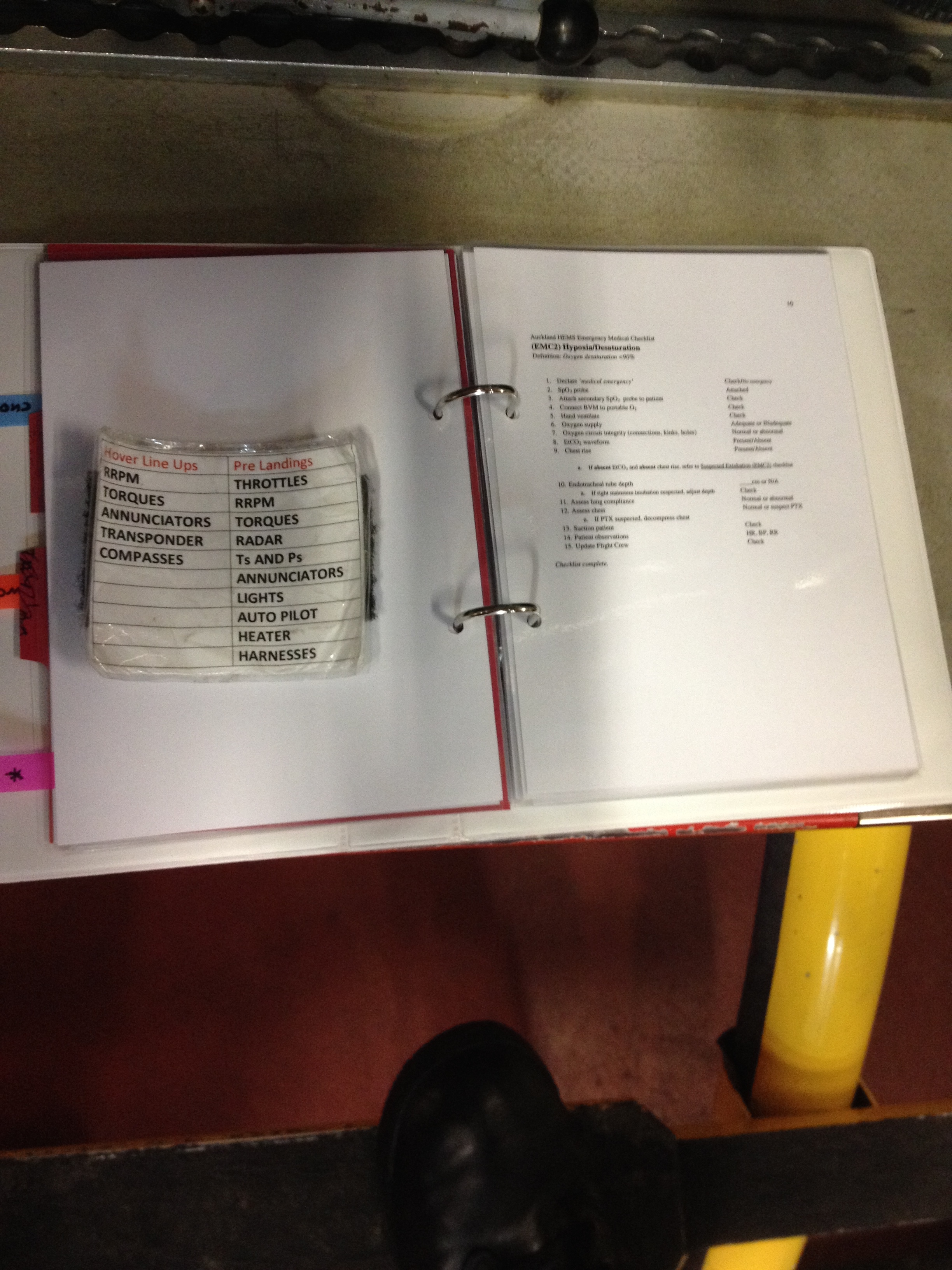
The preliminary hard copy format:

IMG_1315

In-situ checklist testing:

IMG_1328

We’d love to hear comments and suggestions – we’re looking to improve these on an ongoing basis.  Post any thoughts below or email me directly at rgooch44@gmail.com

References:

1.  Haynes AB. Weiser TG. Berry WR. Lipsitz SR. Breizat AS. Dellinger EP. Herbosa T. Joseph S. Kibatala PL. Lapitan MCM. Merry AF. Moorthy K. Reznick RK. Taylor B. Gawande AA. A Surgical Safety Checklist to Reduce Morbidity and Mortality in a Global Population. New England Journal of Medicine. 2009 Jan 29; 360(5):491-9.

2.  Arriaga AF, Bader AM, Wong JM, Lipsitz SR, Berry WR, Ziewacz JE, Hepner DL, Boorman DJ, Pozner CN, Smink DS, Gawande AA. Simulation-Based Trial of Surgical-Crisis Checklists New England Journal Of Medicine 2013;368:246-53.

3.  Ziewacz JE, Arriaga AF, Bader AM, Berry WR, Edmondson L, Wong JM, Lipsitz SR, Hepner DL, Peyre S, Nelson S, Boorman DJ, Smink DS, Ashley SW, Gawande AA. Crisis Checklists for the Operating Room: Development and Pilot Testing Journal of the American College of Surgeons. Aug 2011; 213(2): 212-217.

Care for your controlled drugs – An evolution

Carrying controlled drugs in a pre-hospital setting is a recipe for accidental vial breakages.

In January 2014 the weaknesses of the traditional leather and closed cell foam belt pouch were discussed: Care for your controlled drugs – a 3D printer solution.

The innovative 3D printed vial insert greatly improved vial breakages. Review of the insert’s function identified two failings: Firstly occasional vial breakage occurred; Secondly the Morphine ampules abruptly began to get stuck within the insert. The first problem seemed to arise due to downward blows onto the expose vial tops. The second problem was tracked to a change in the manufacturers label thickness only affecting the Morphine ampules that led to the vials jamming in the precisely moulded insert. 

These difficulties prompted a search for solutions. The further evolution of the drug pouch followed the realisation that an insert could become the whole carriage system and protection from downward forces would be required to stop breakage. 

Evolutionary Steps

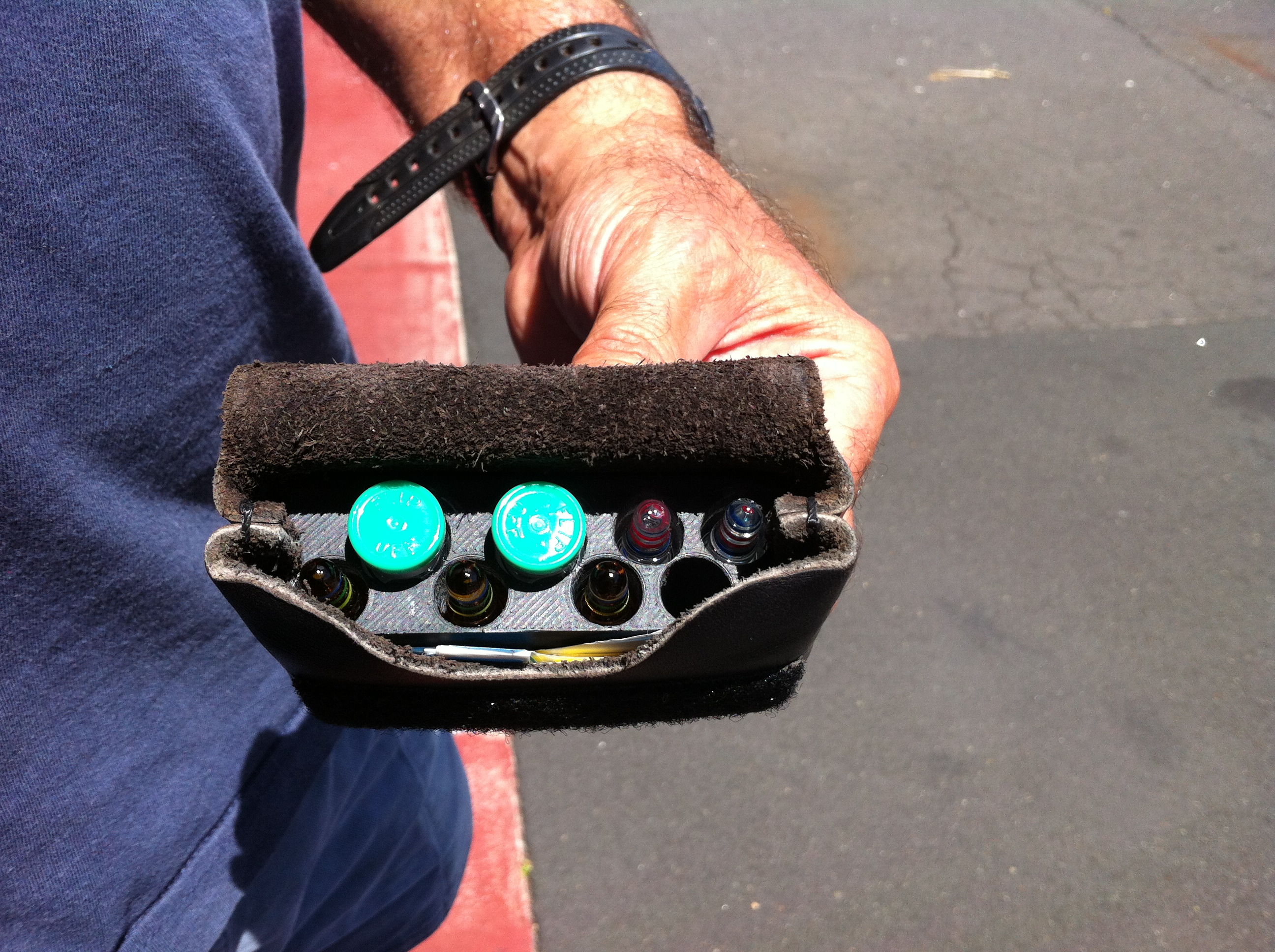
Original leather pouch with the 3D printer insert  

Image


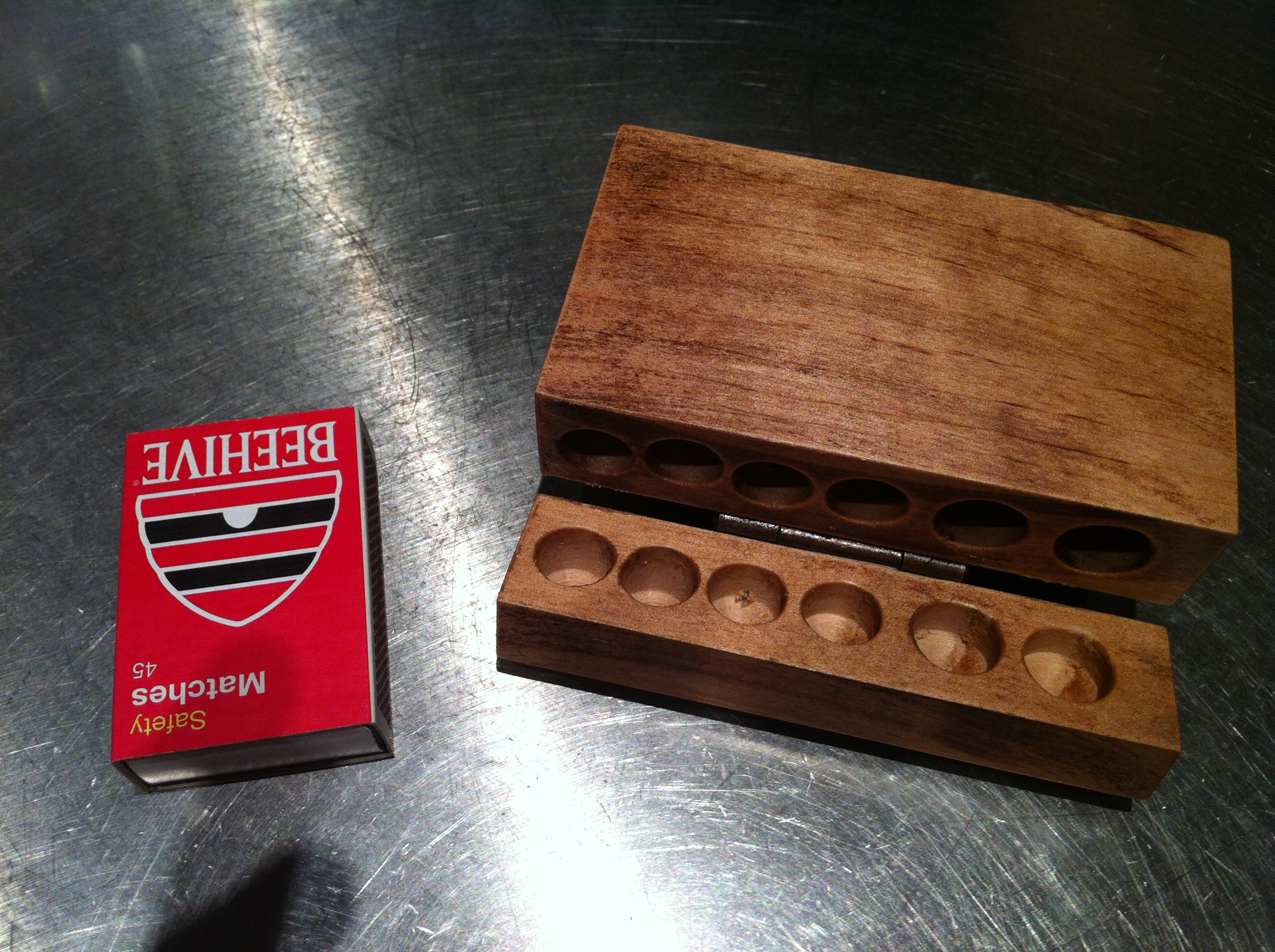
Wooden prototype protecting vials in up to 2m falls onto concrete

Image


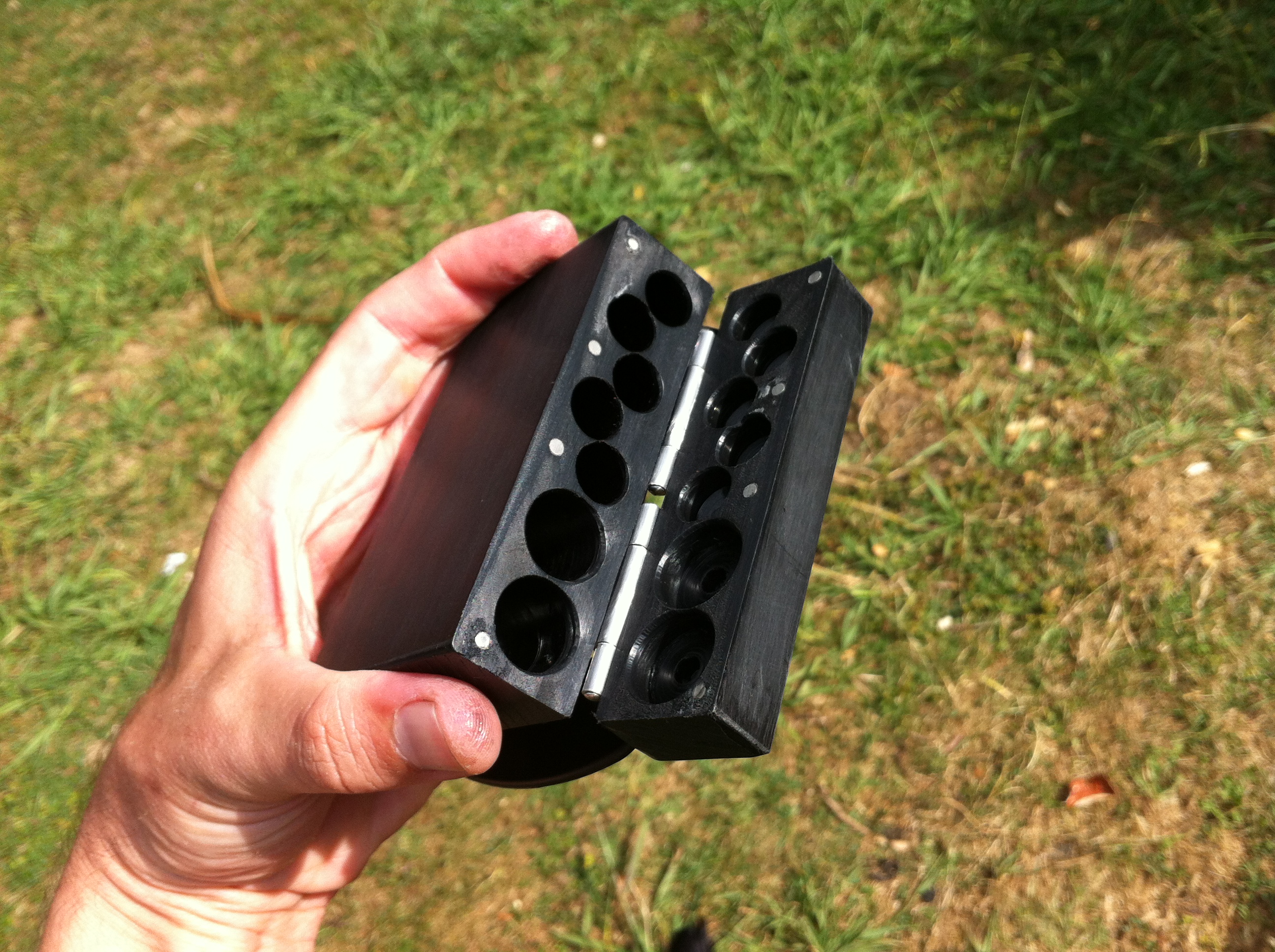
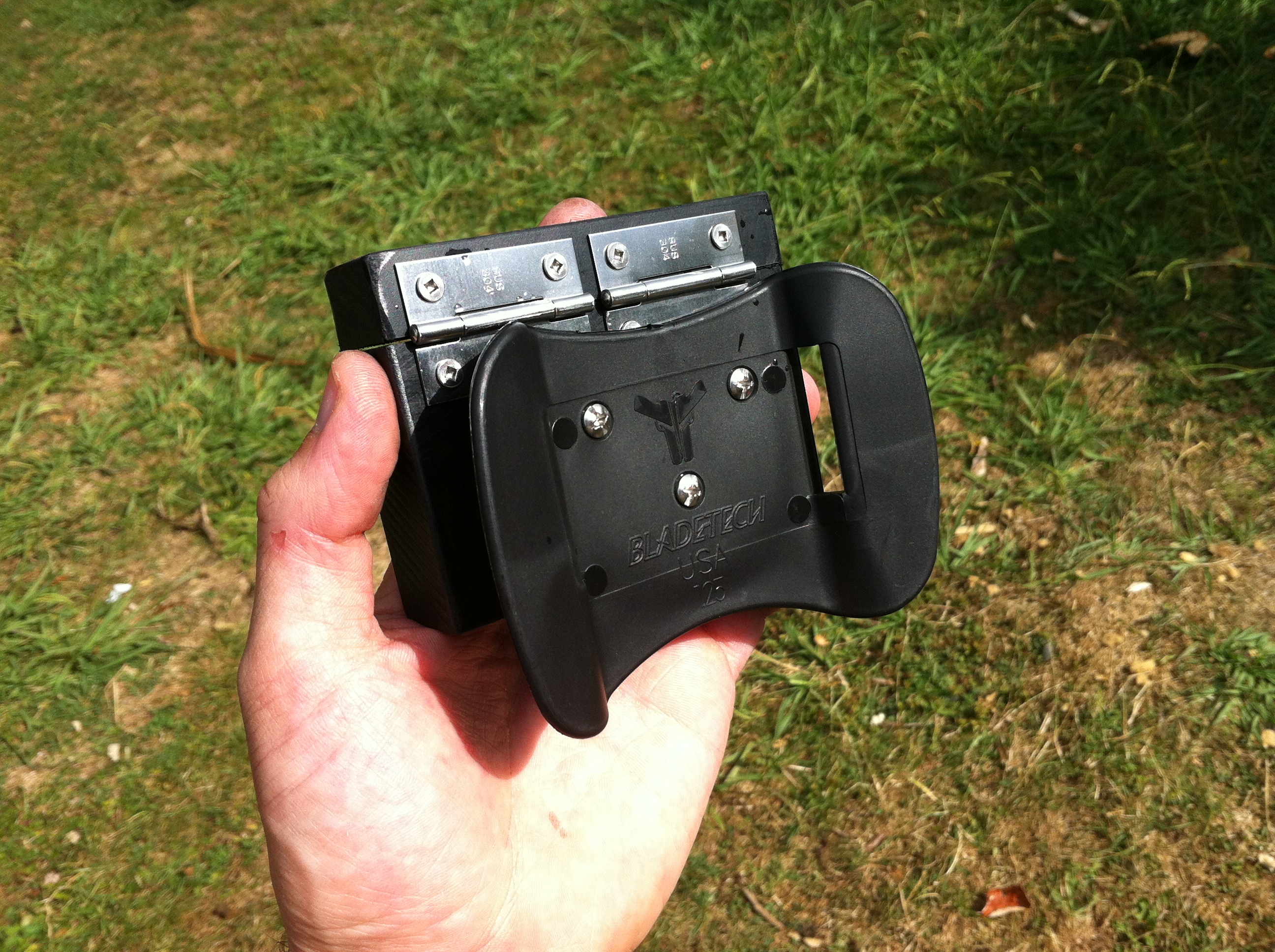
HDPE vial holder showing magnetic catches, stainless fastenings and moulded belt loops

ImageImage


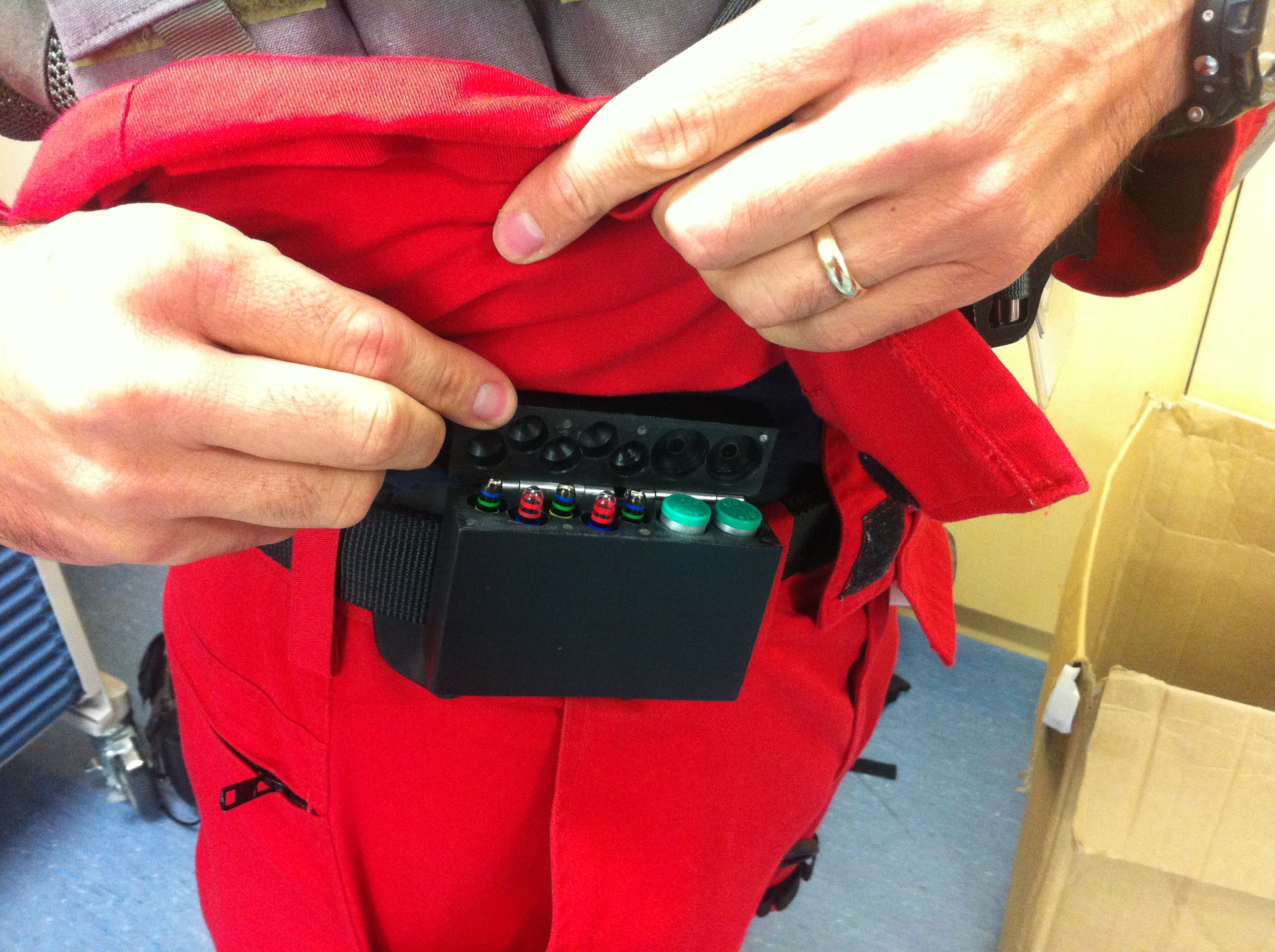
Controlled drug carry system in use


Image

Some of the successes of the system include: A durable non-porous material capable of wash down and disinfection; magnetic catches; silicon rubber seated vial wells for shock absorption. 

Current feedback from the austere clinical environment is that the system is working well.